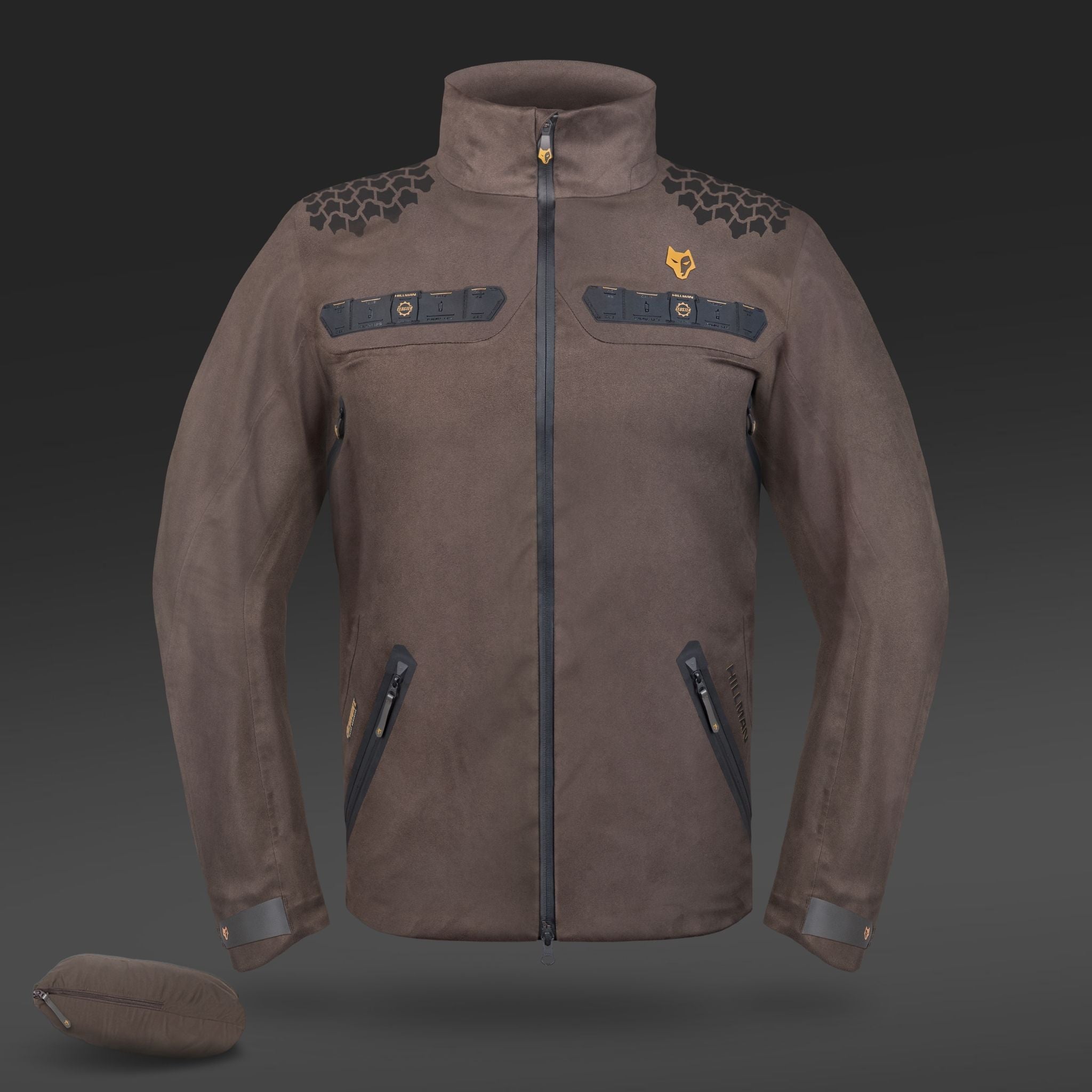
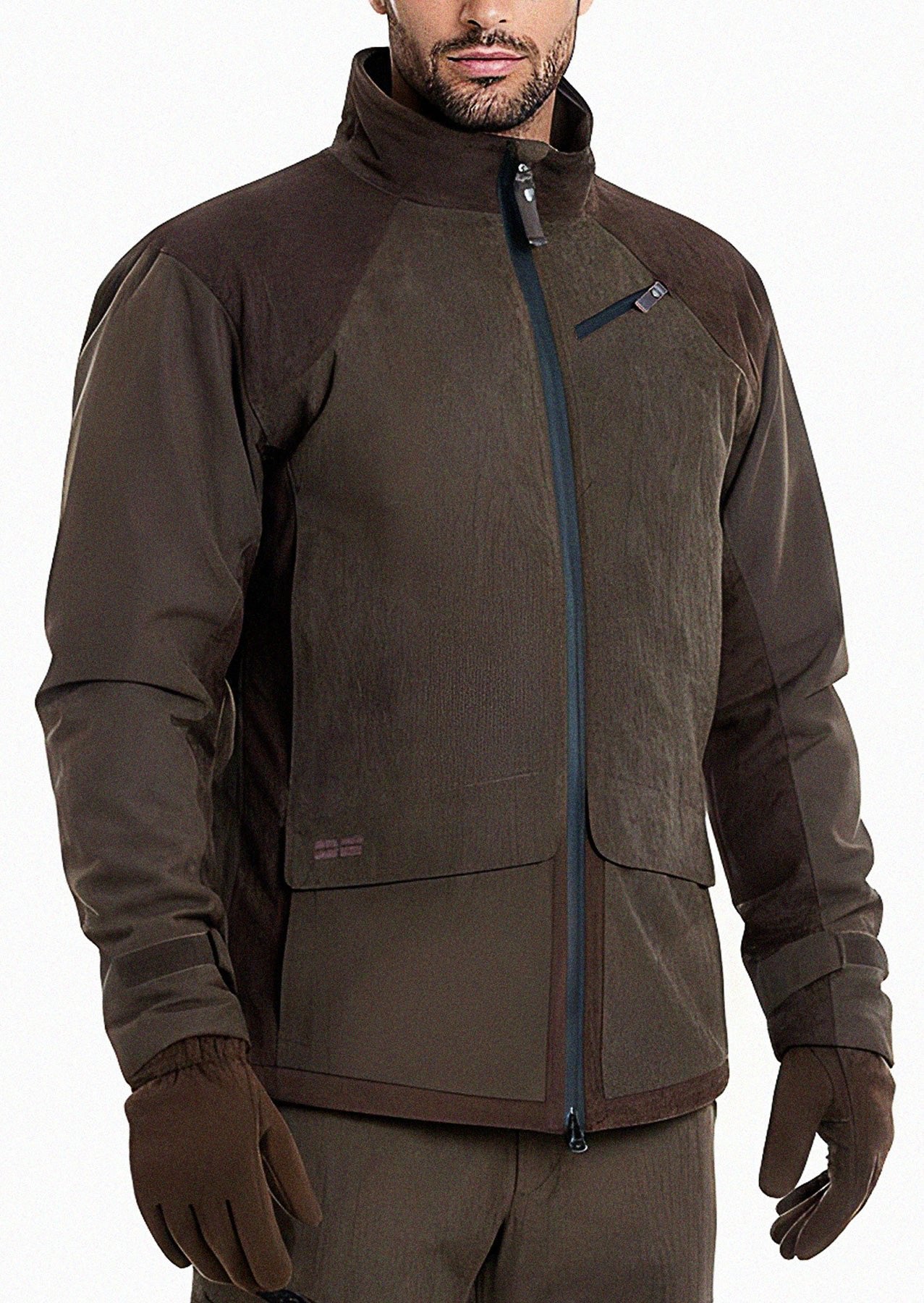
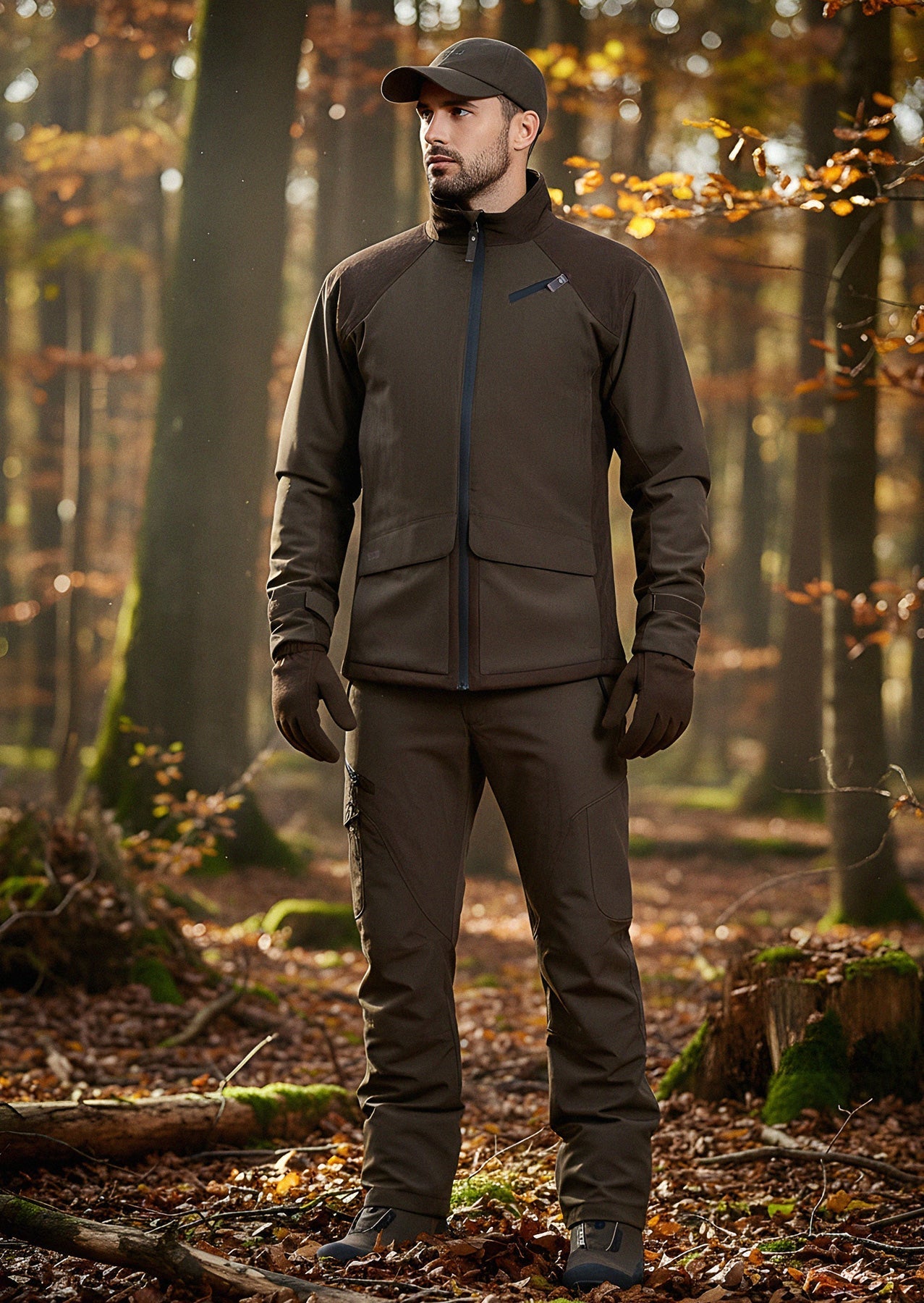
Winter Hunting Jacket - Cold Weather AlphaShell | 6OL
Sale price899.00 EURRegular price
999.00 EUR
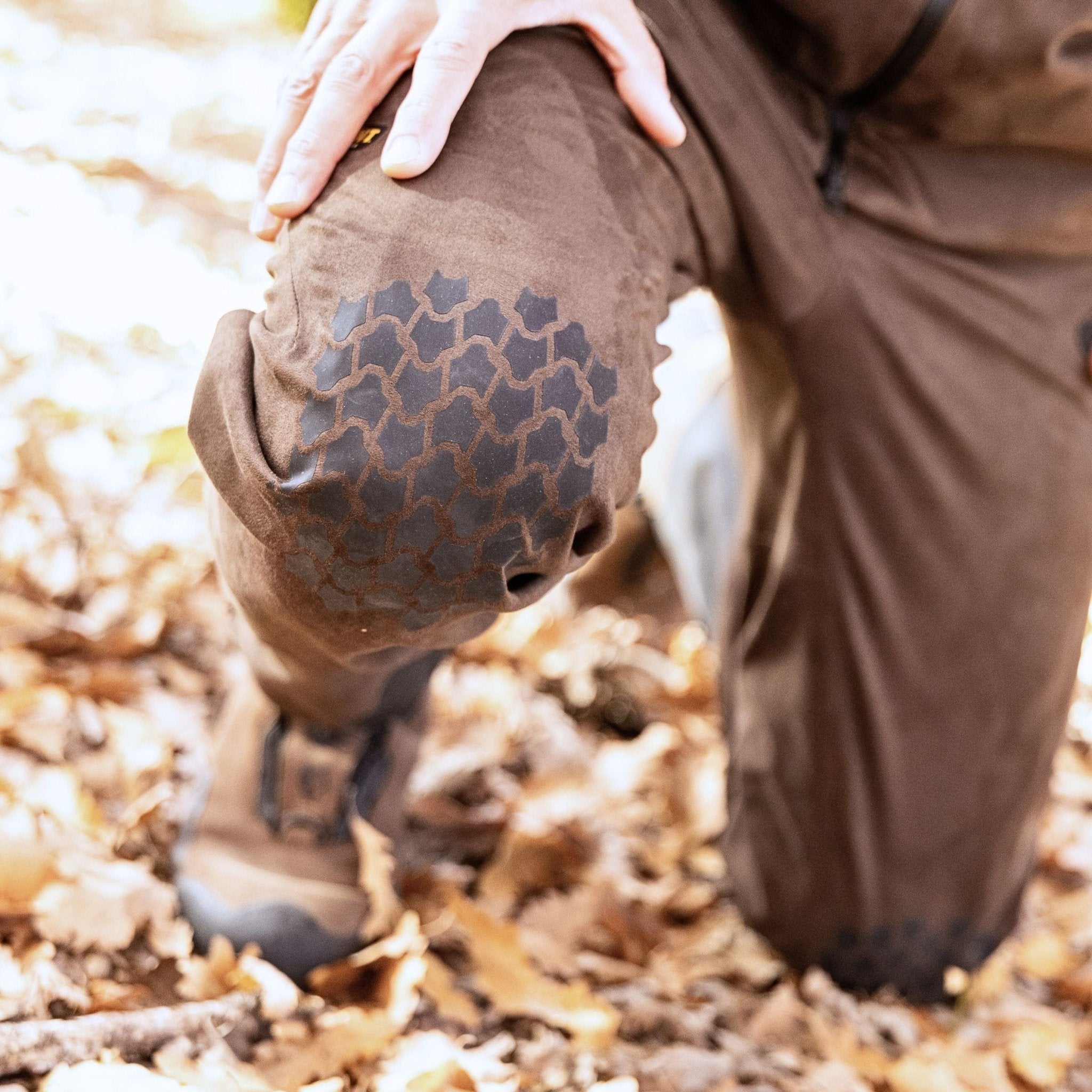
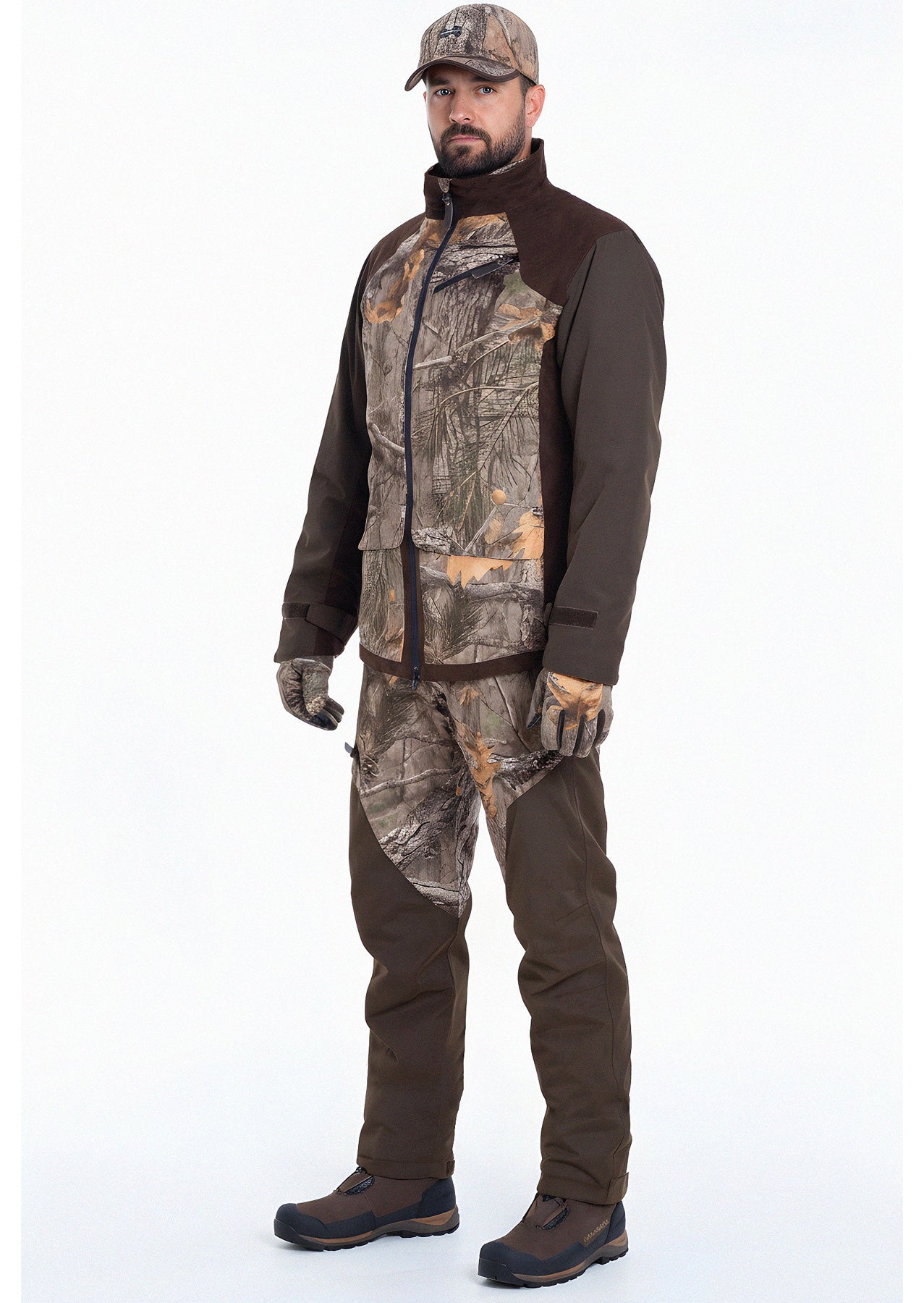
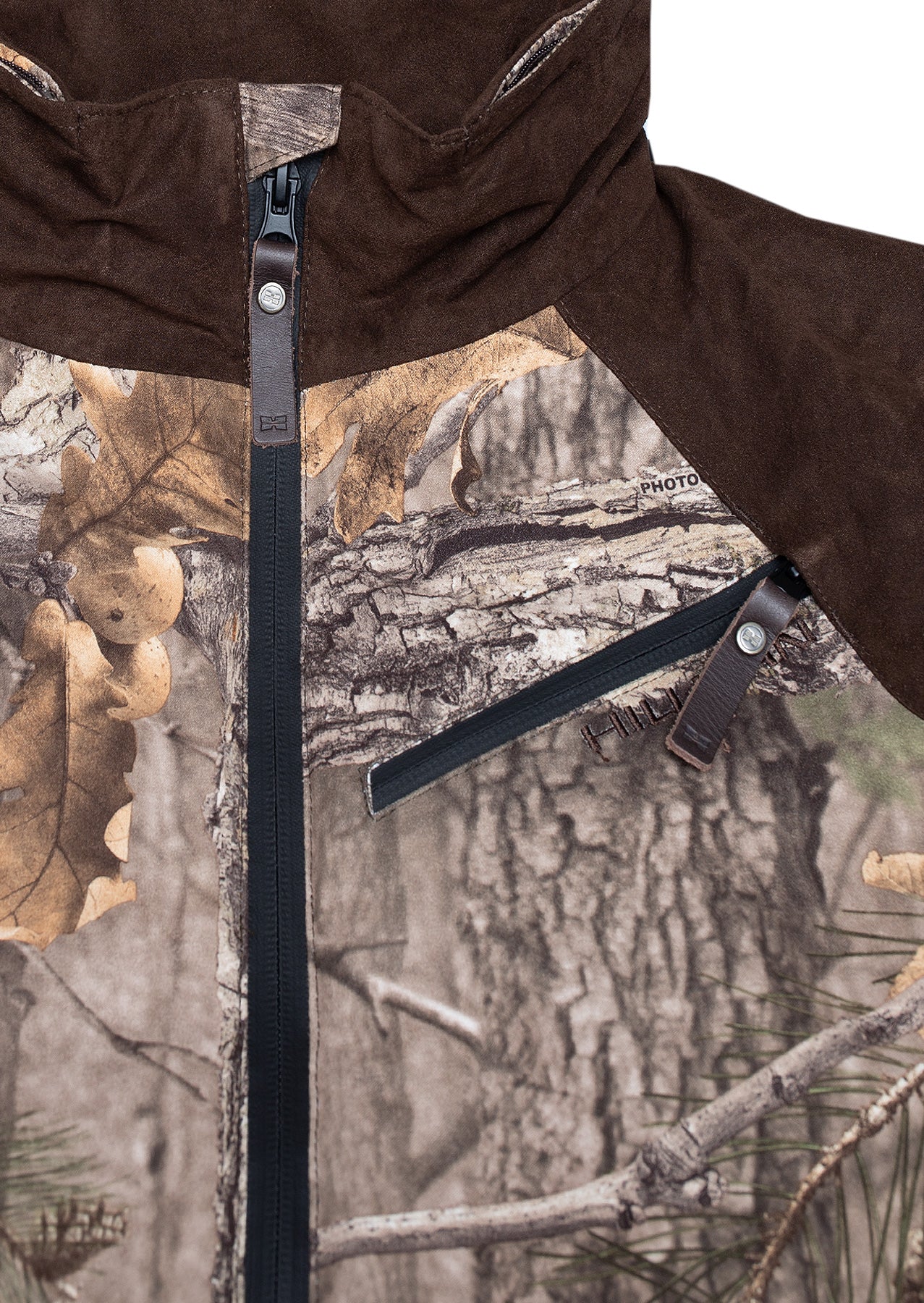
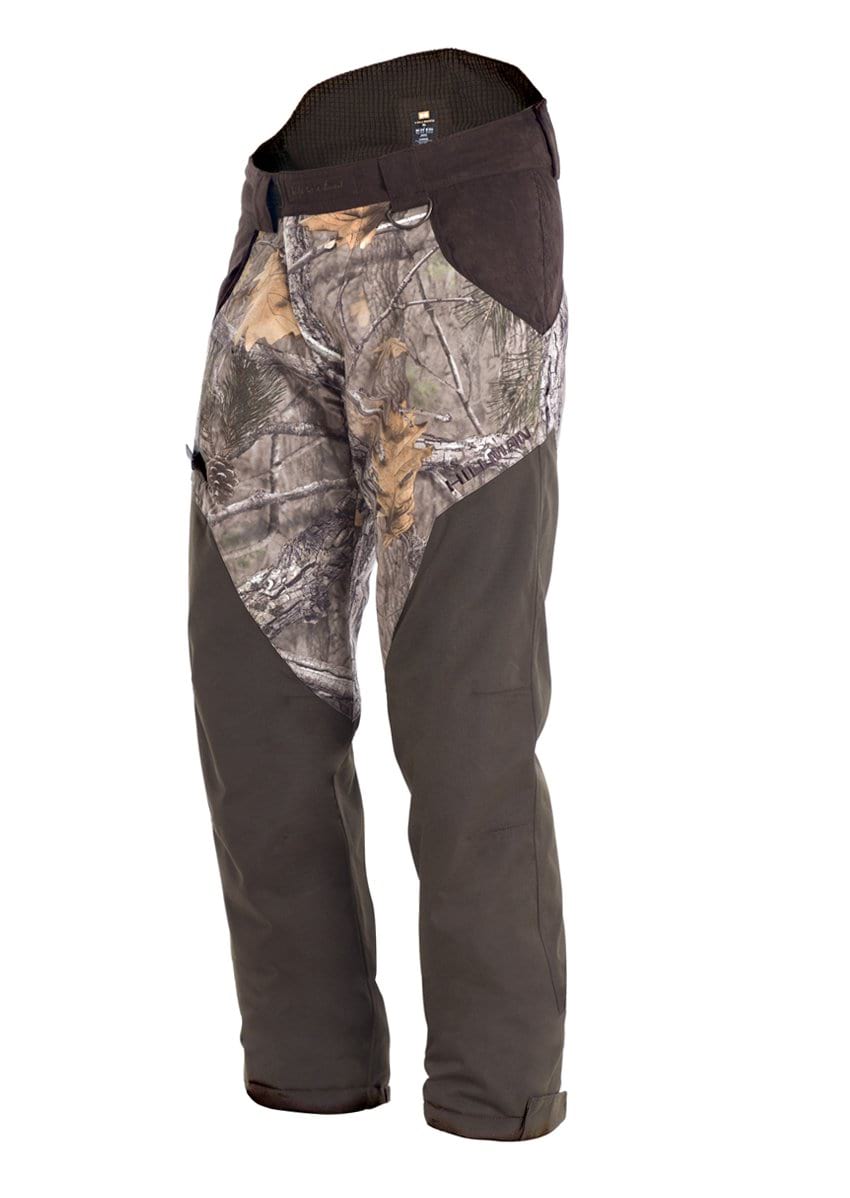
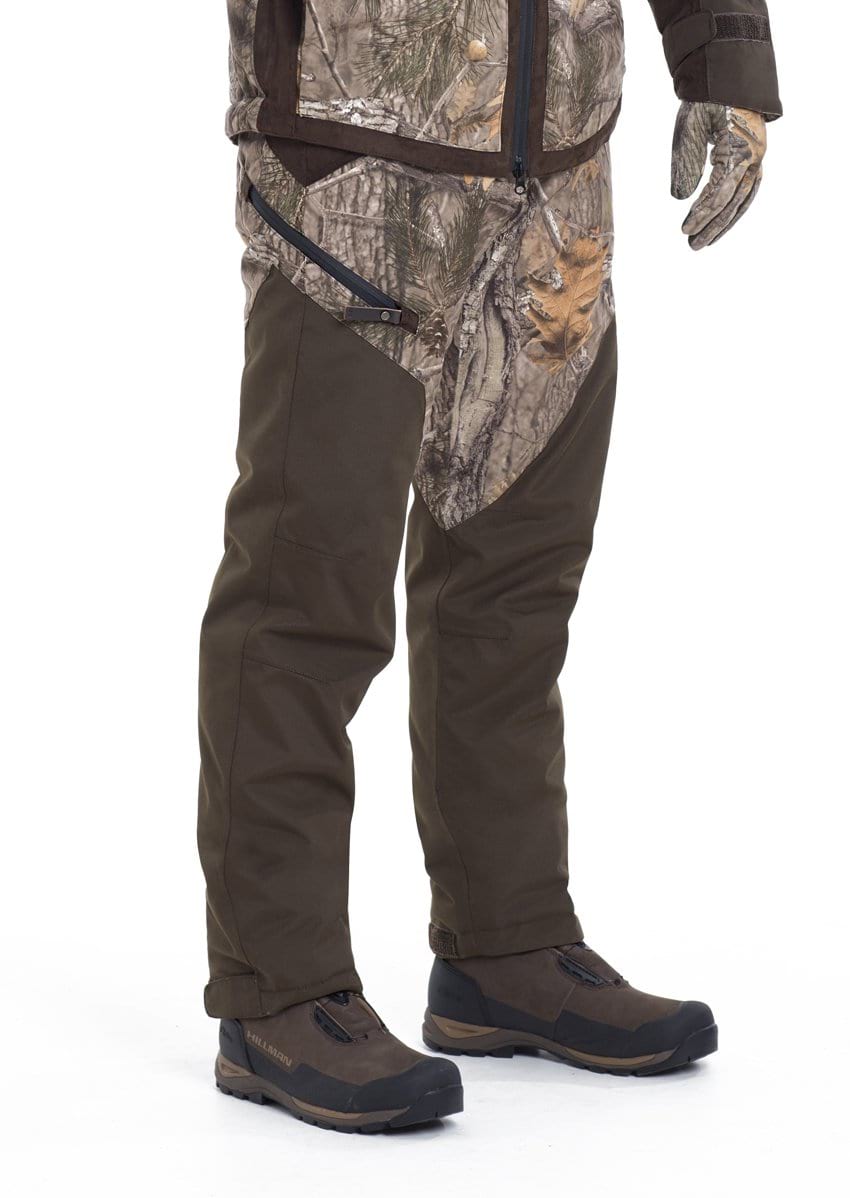
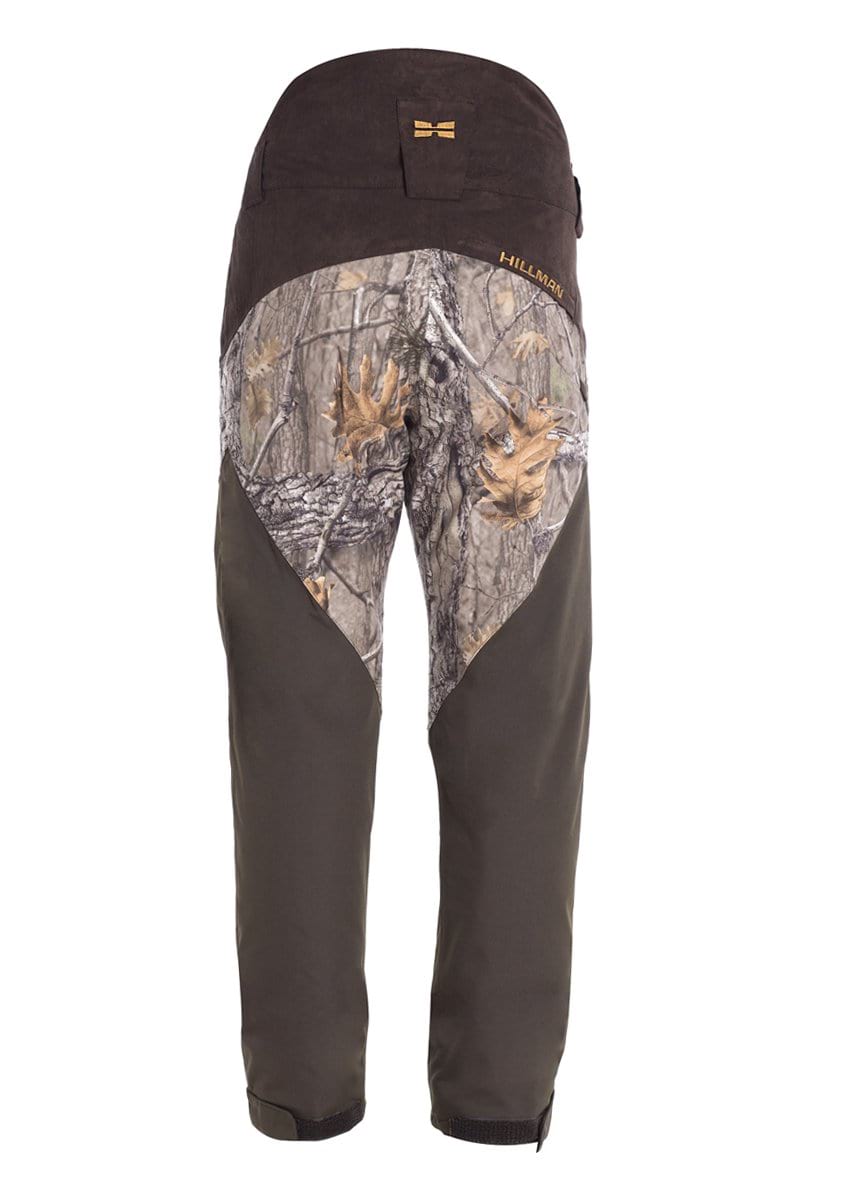
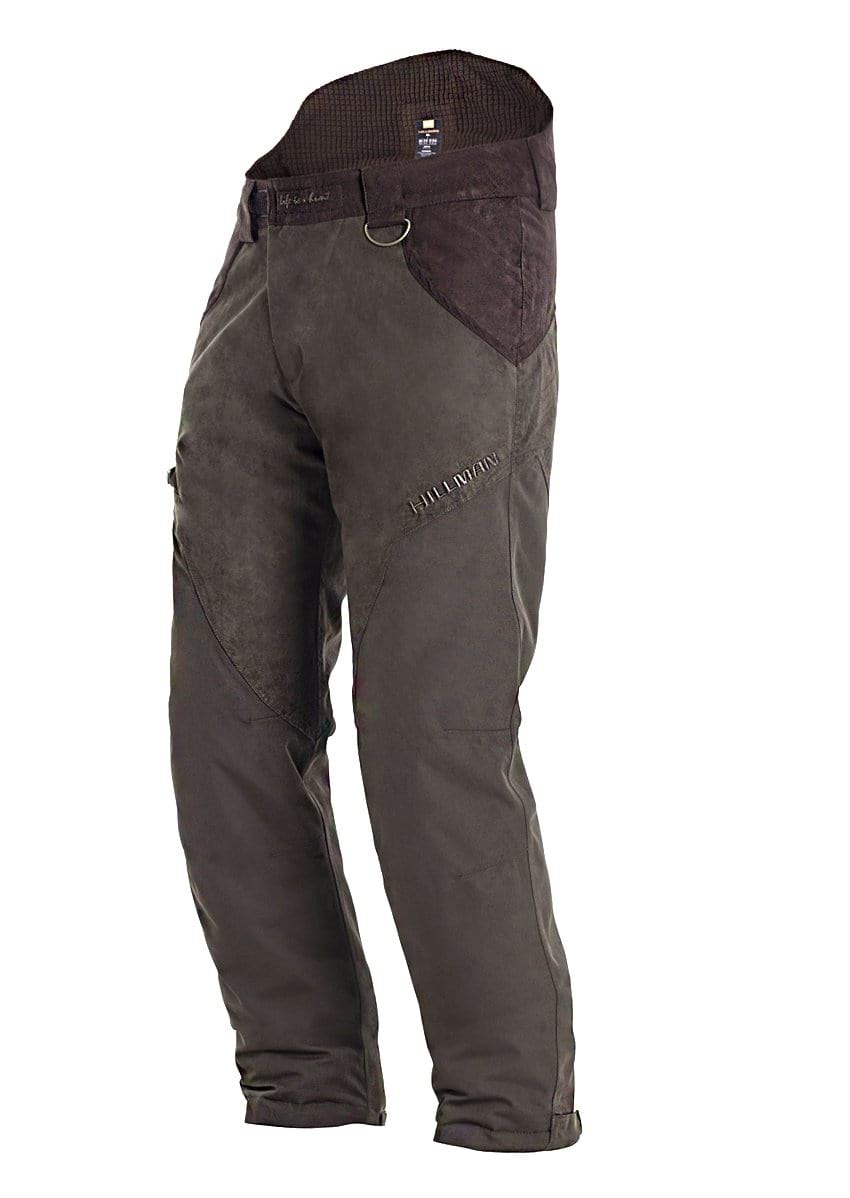
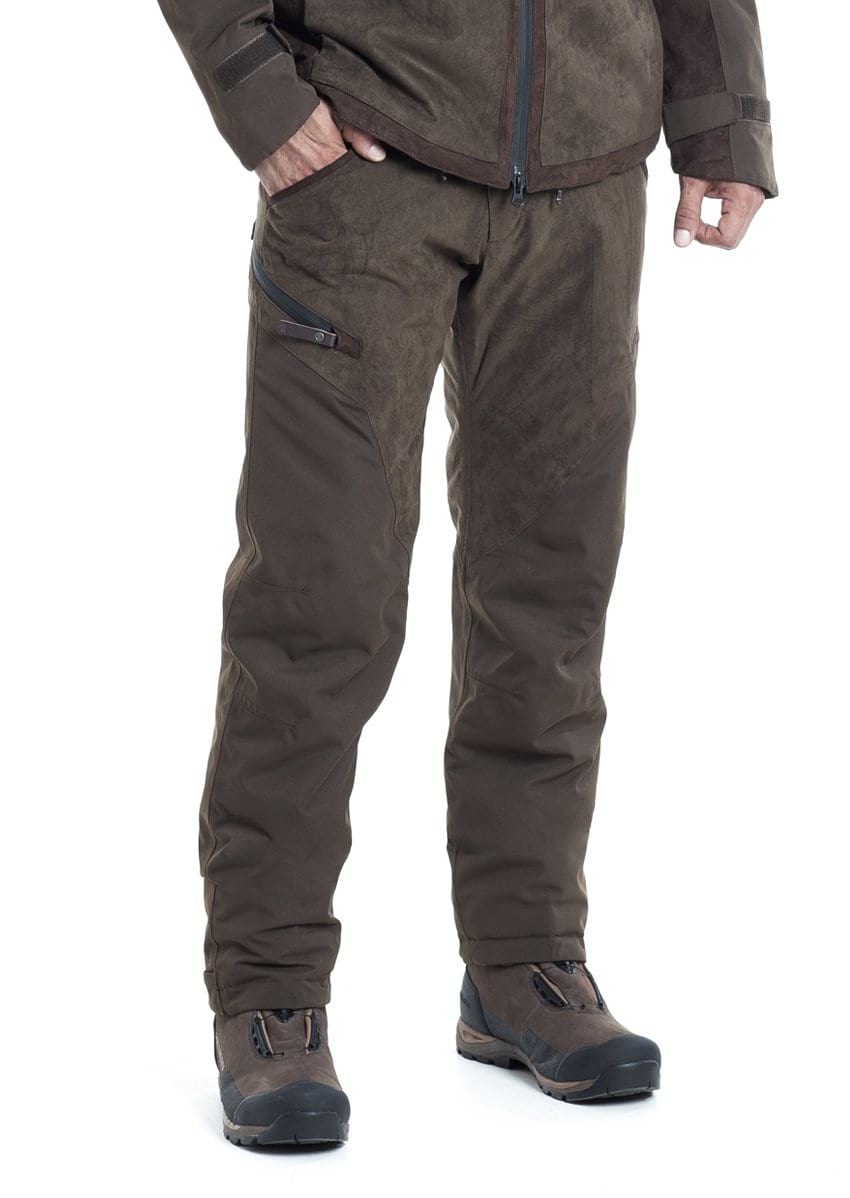
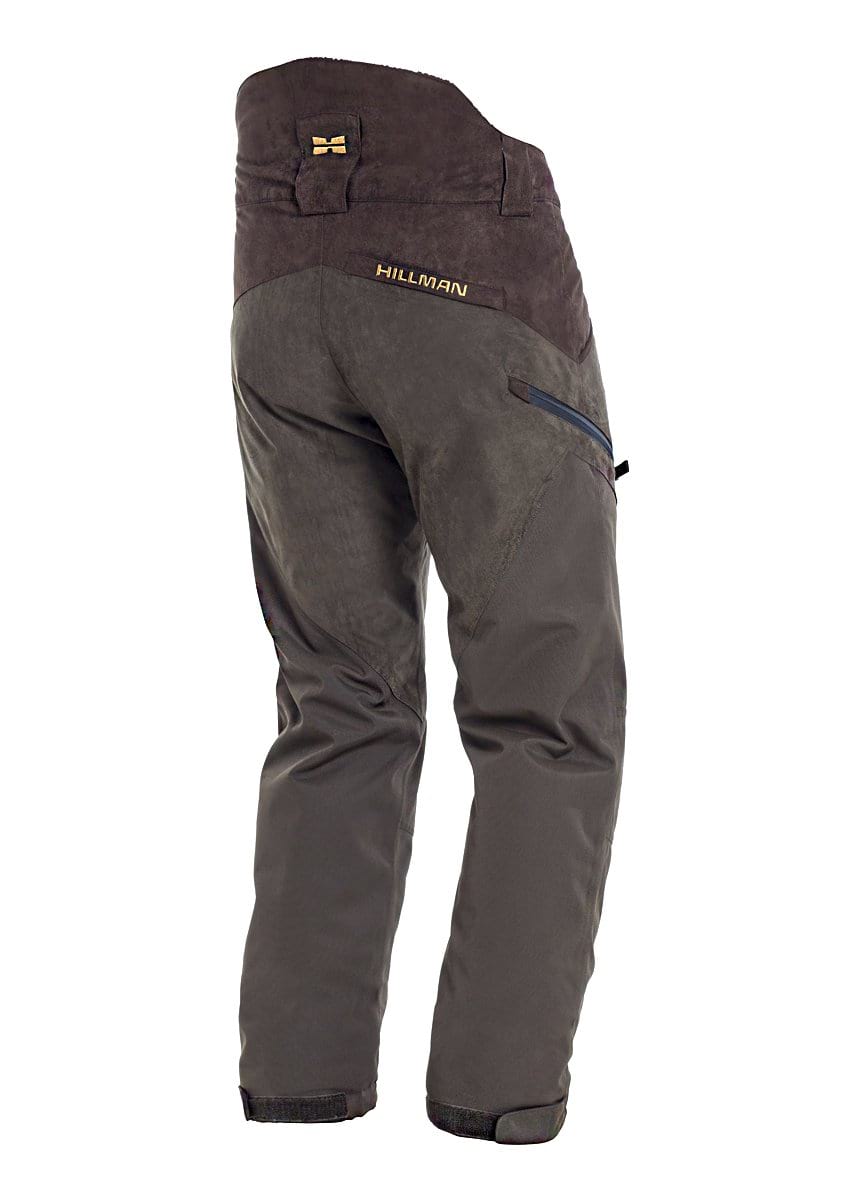
Winter Hunting Pants - Cold Weather | AlphaShell 6OL
Sale price599.00 EURRegular price
649.00 EUR
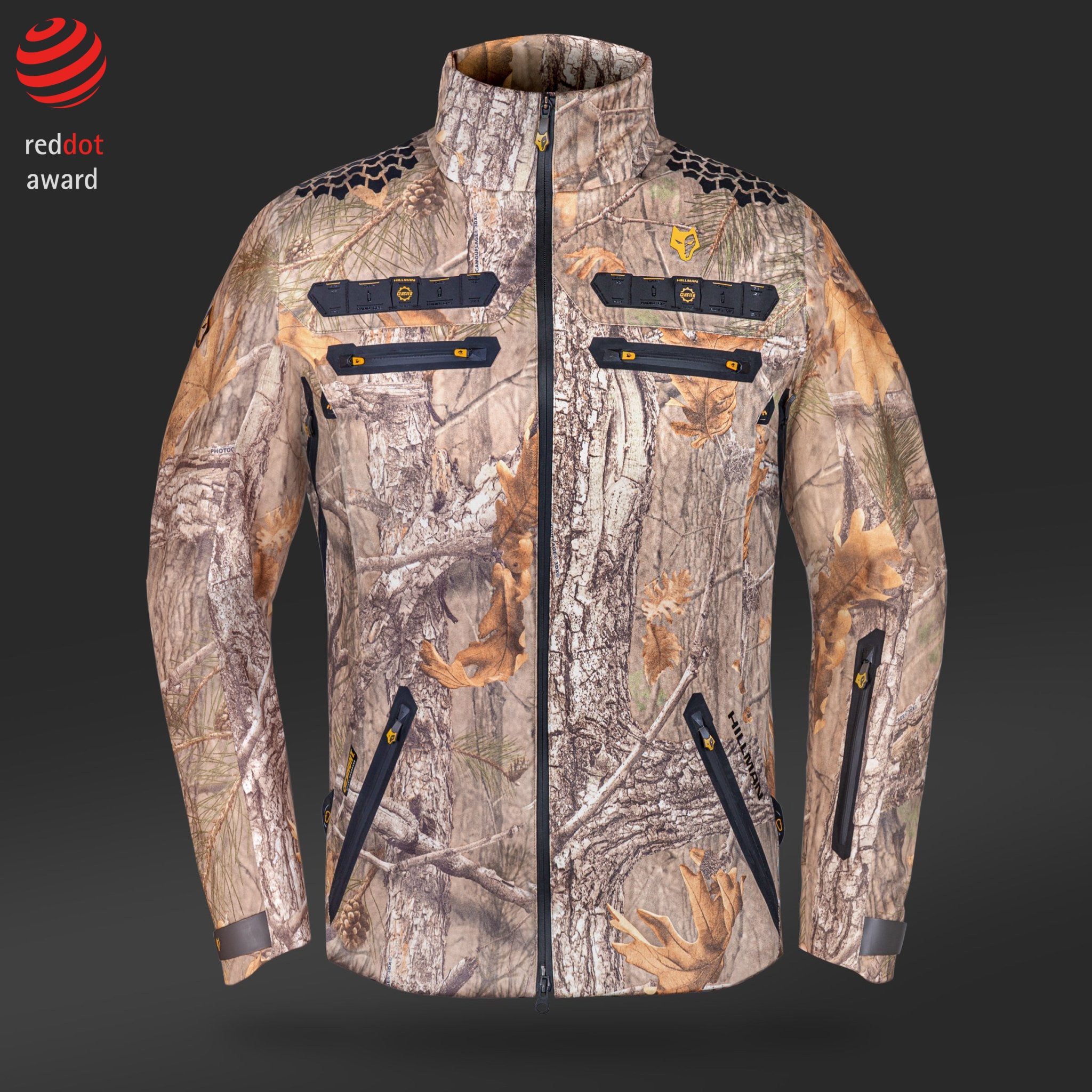
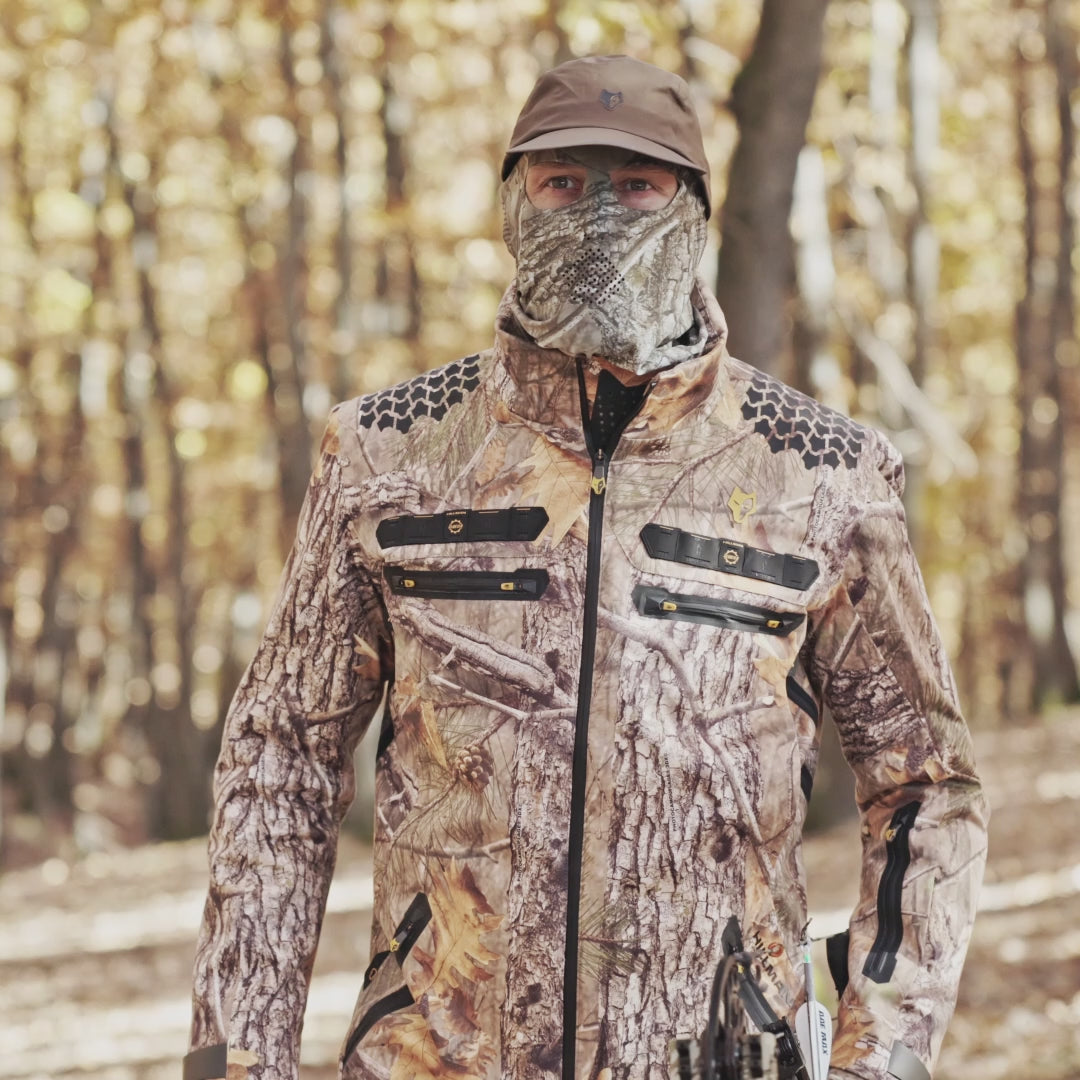
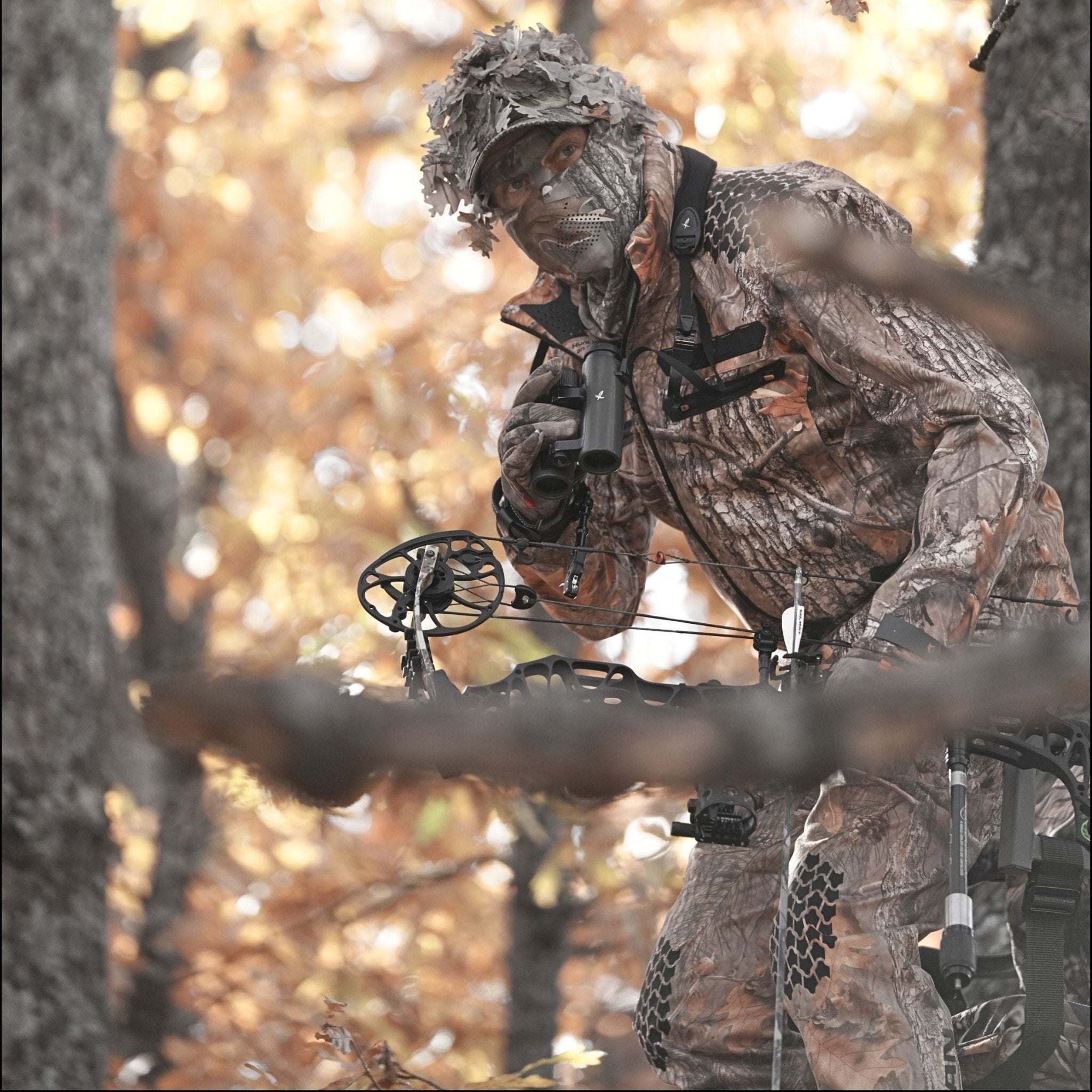
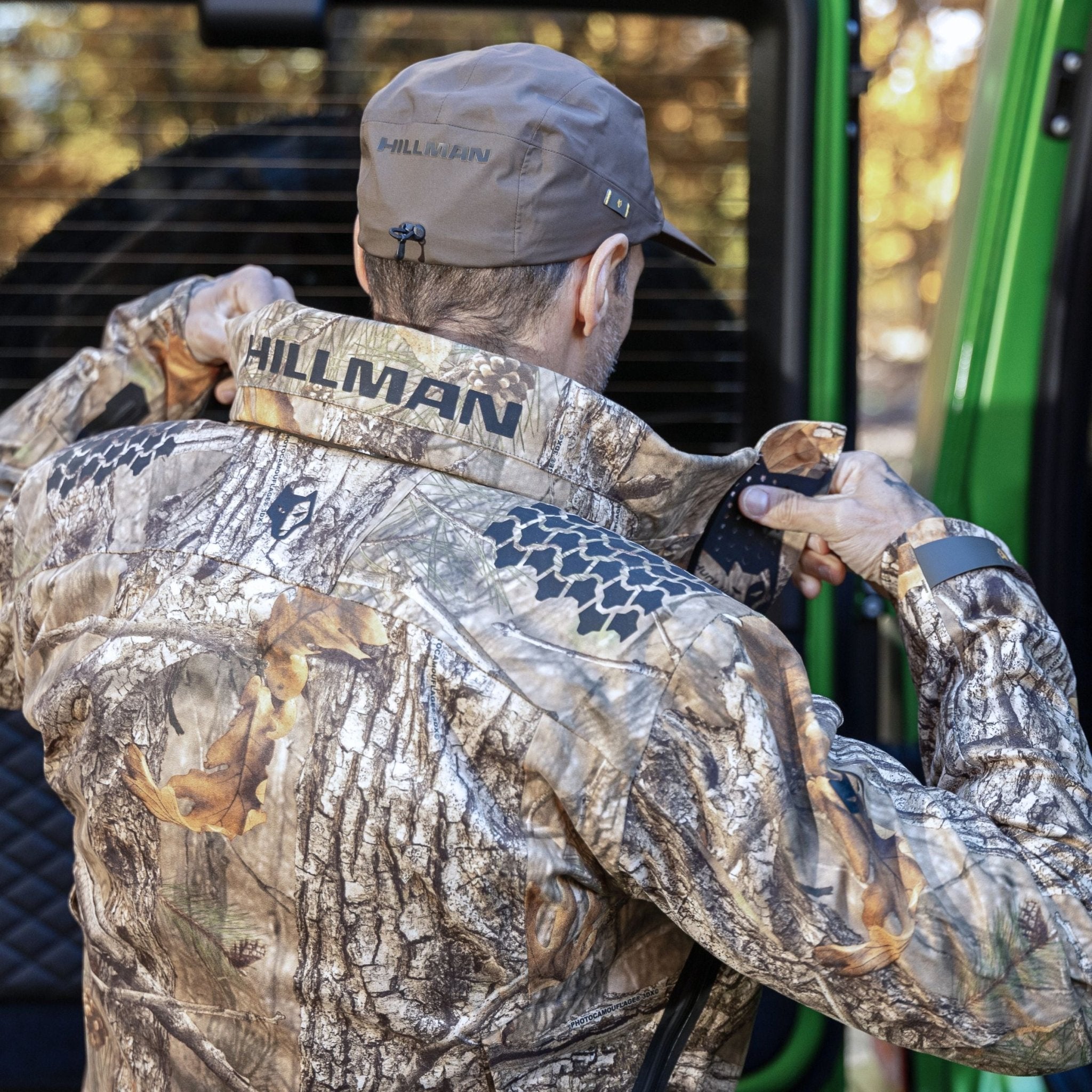
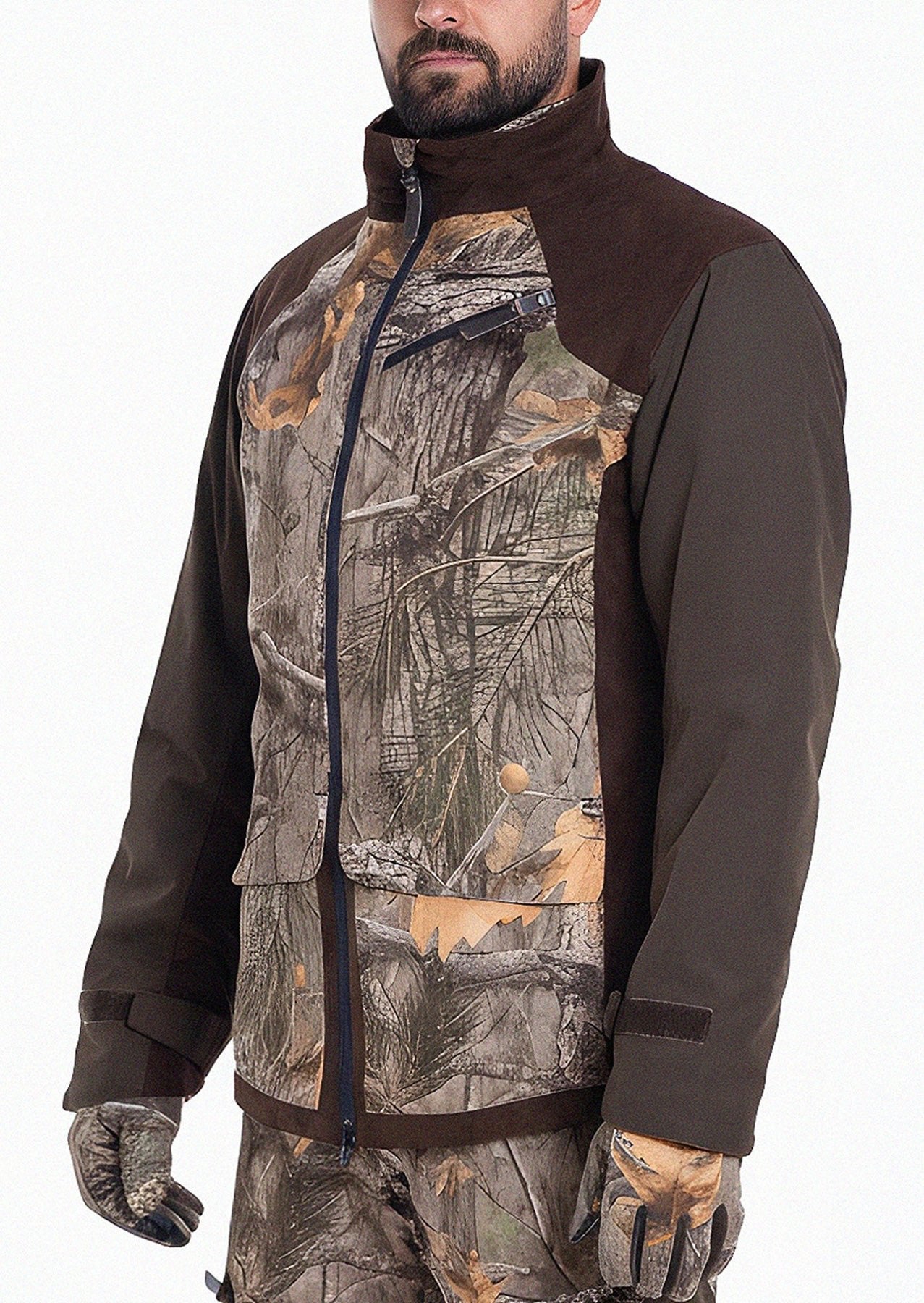
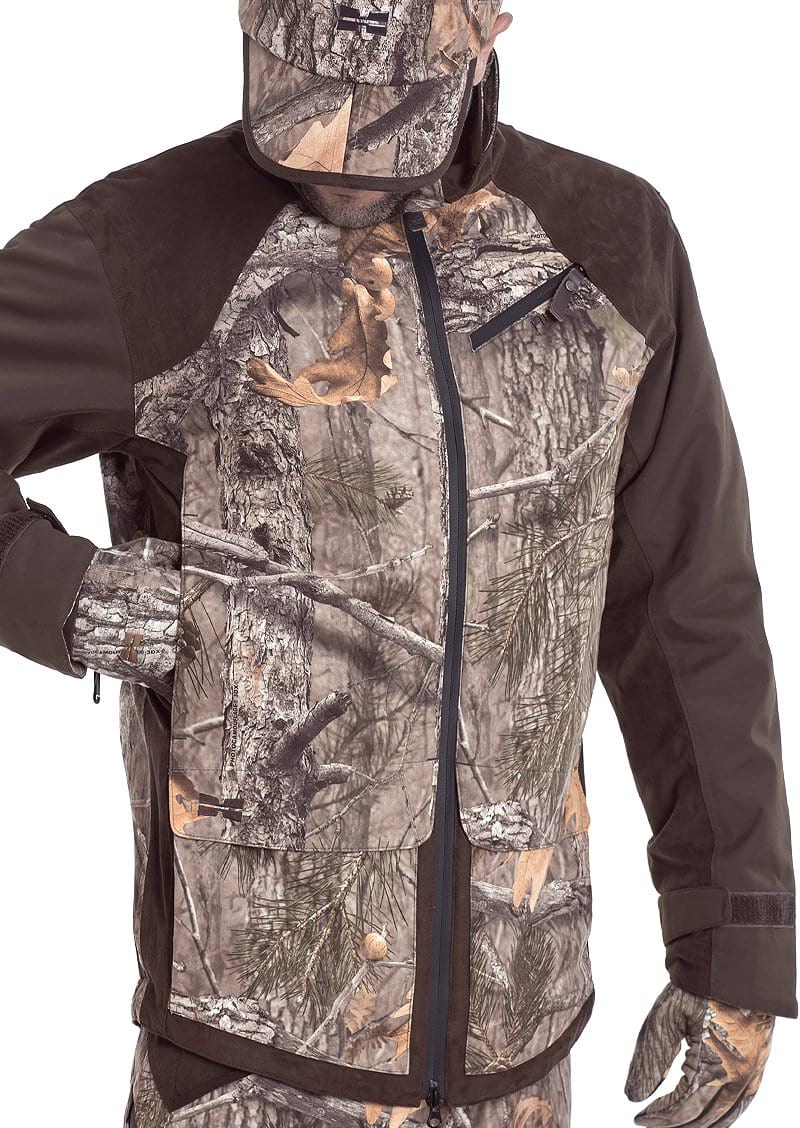
Camo Winter Jacket - Waterproof Insulated | AlphaShell 6OL
Sale price899.00 EURRegular price
999.00 EUR
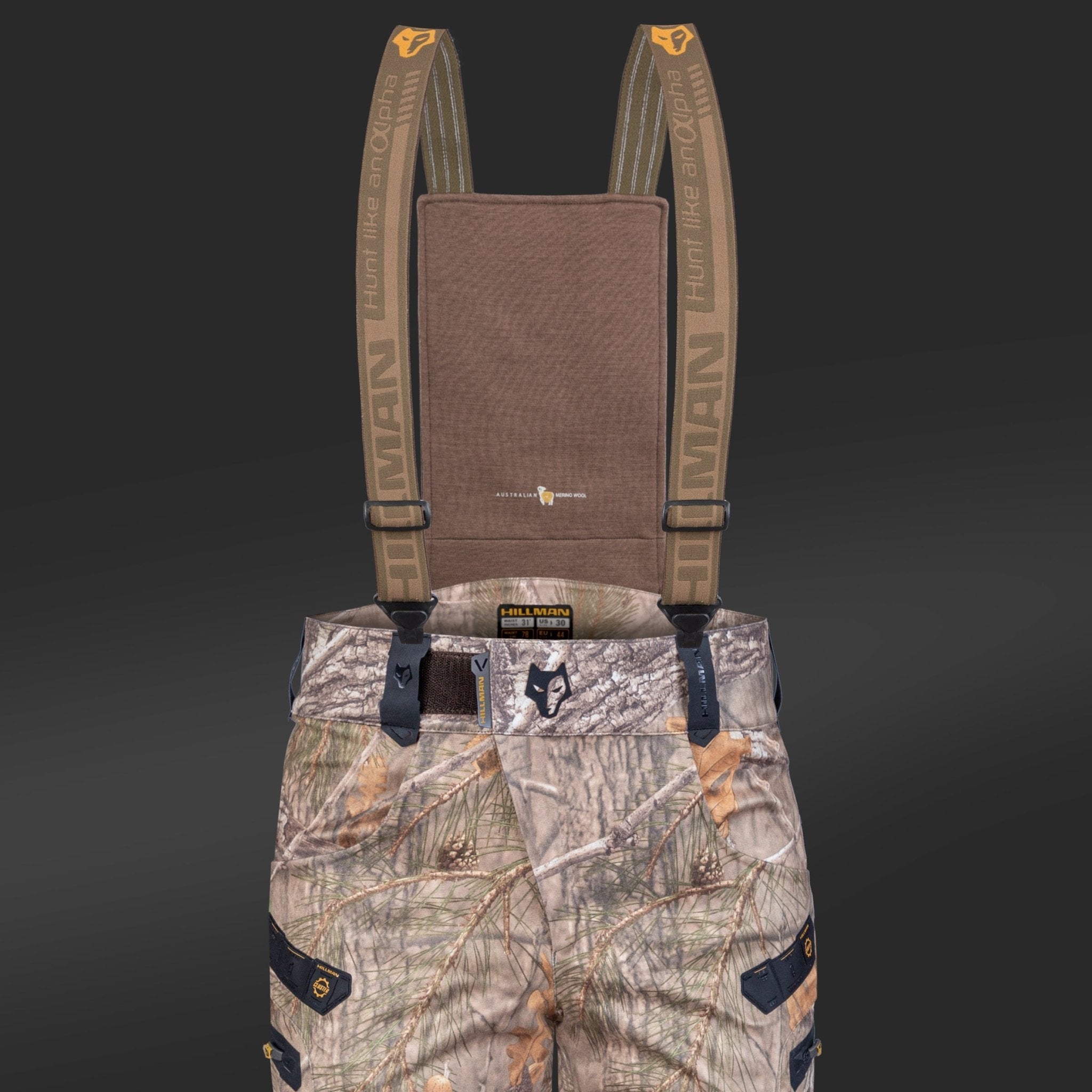
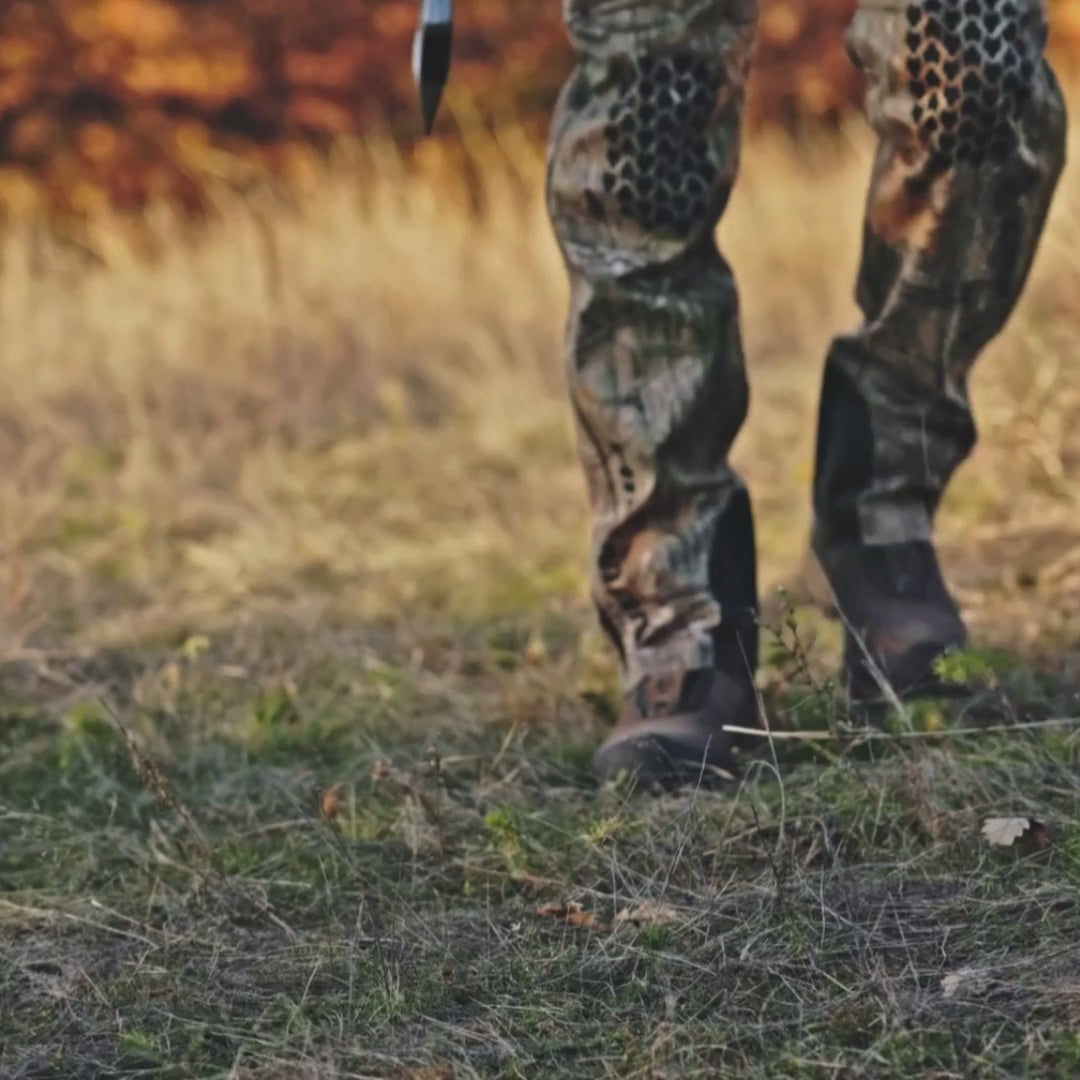
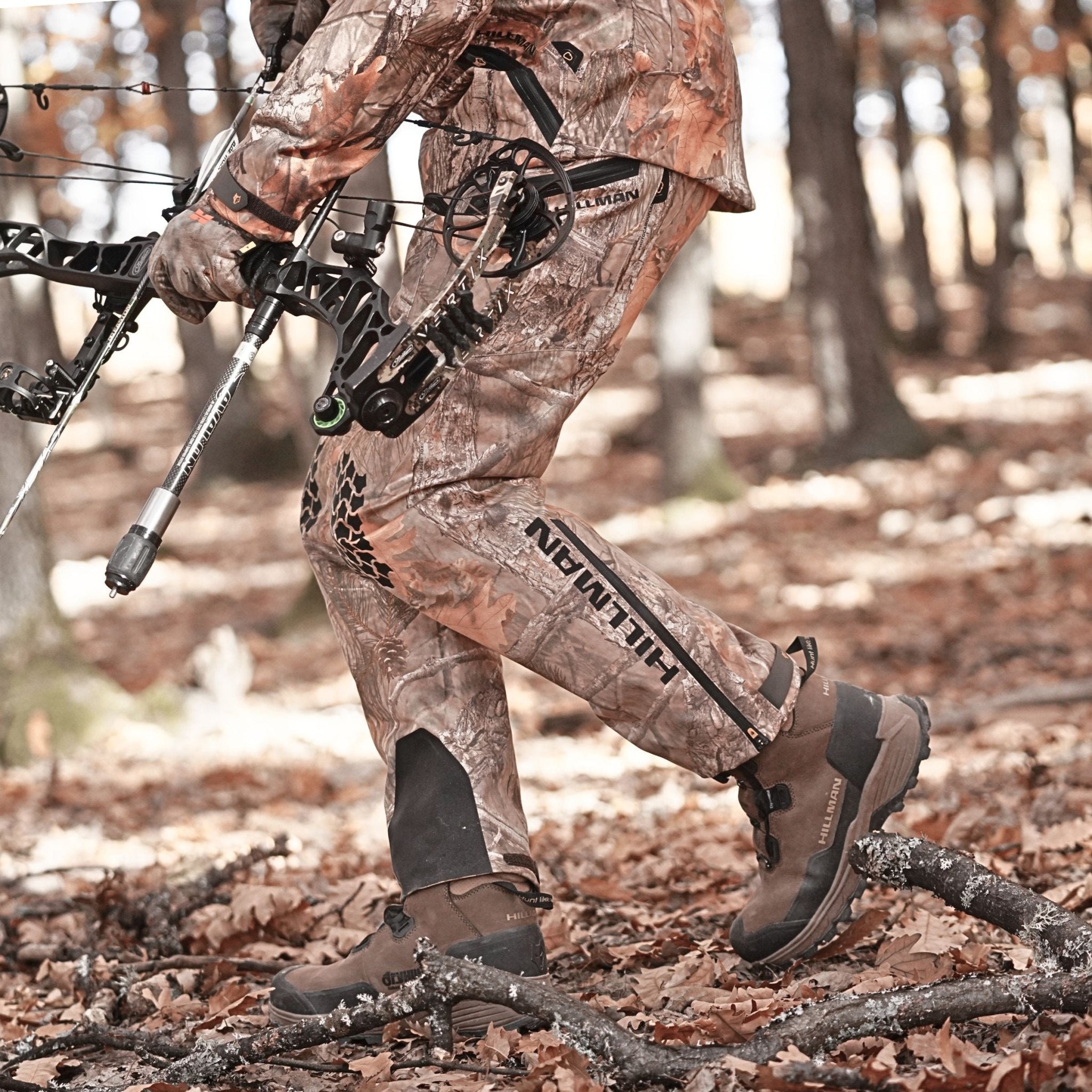
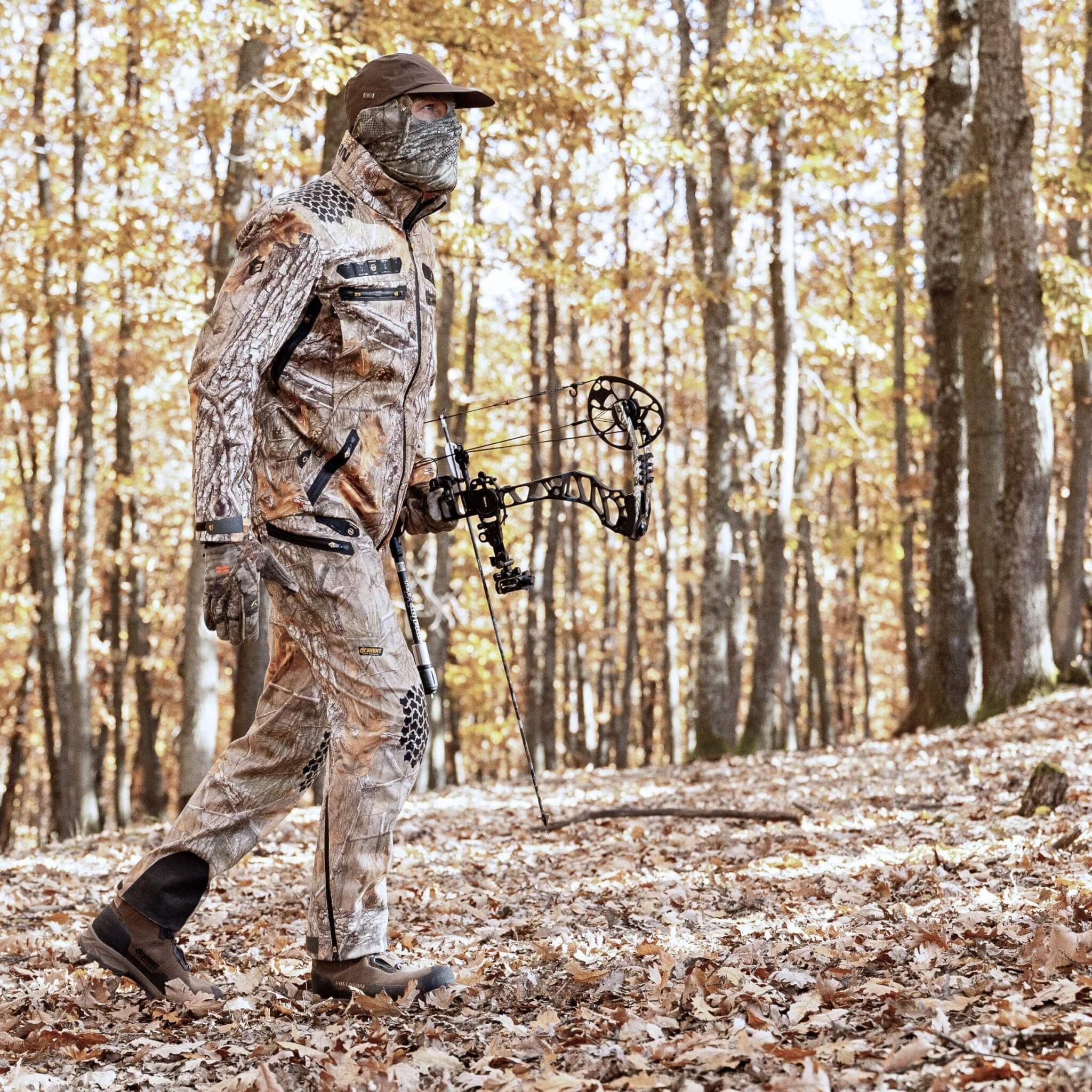
Cold Weather Camo Pants - Winter Hunting AlphaShell | 6OL
Sale price599.00 EURRegular price
649.00 EUR
Sale price349.00 EURRegular price
499.00 EUR
Sale price249.00 EURRegular price
399.00 EUR
Sale price349.00 EURRegular price
499.00 EUR
Sale price249.00 EURRegular price
399.00 EUR
Sale price29.00 EURRegular price
39.00 EUR
Winter Hunting Gear Built to Keep Hunters Warm
Effective warm hunting gear protects against wind, frozen ground, wet snow and inactivity without locking the body into a stiff, oversized outfit. Winter hunting rarely means standing still all day. A hunter may climb through woodland, kneel to examine a track and then spend an hour exposed in a high seat.
Insulation must retain heat during those pauses, while ventilation and breathable layers help control sweat during movement. Waterproof protection also matters because damp insulation and wet base layers lose warmth quickly, particularly when the temperature falls after sunset.

What Should Warm Hunting Gear Include?
The best winter hunting gear is a complete system consisting of a moisture-managing base layer, insulating mid-layer, winter jacket, warm trousers, beanie, socks and weather-ready footwear. Each part protects a different area or manages a different source of heat loss.
The correct combination depends on cold, precipitation and activity. A static driven day needs more retained warmth than a steep stalk, while wet snow demands stronger waterproof construction than dry continental frost.
Winter Hunting Jacket for Upper-Body Warmth
A winter hunting jacket is the main barrier against cold wind, snow and external moisture. It must insulate the torso, cover the waist and protect the neck and head without restricting the shoulders when aiming.
Details such as a shaped hood, adjustable cuffs, ventilation and accessible pockets become particularly valuable during long waits. The jacket should also leave enough internal space for base and mid-layers without compressing them.
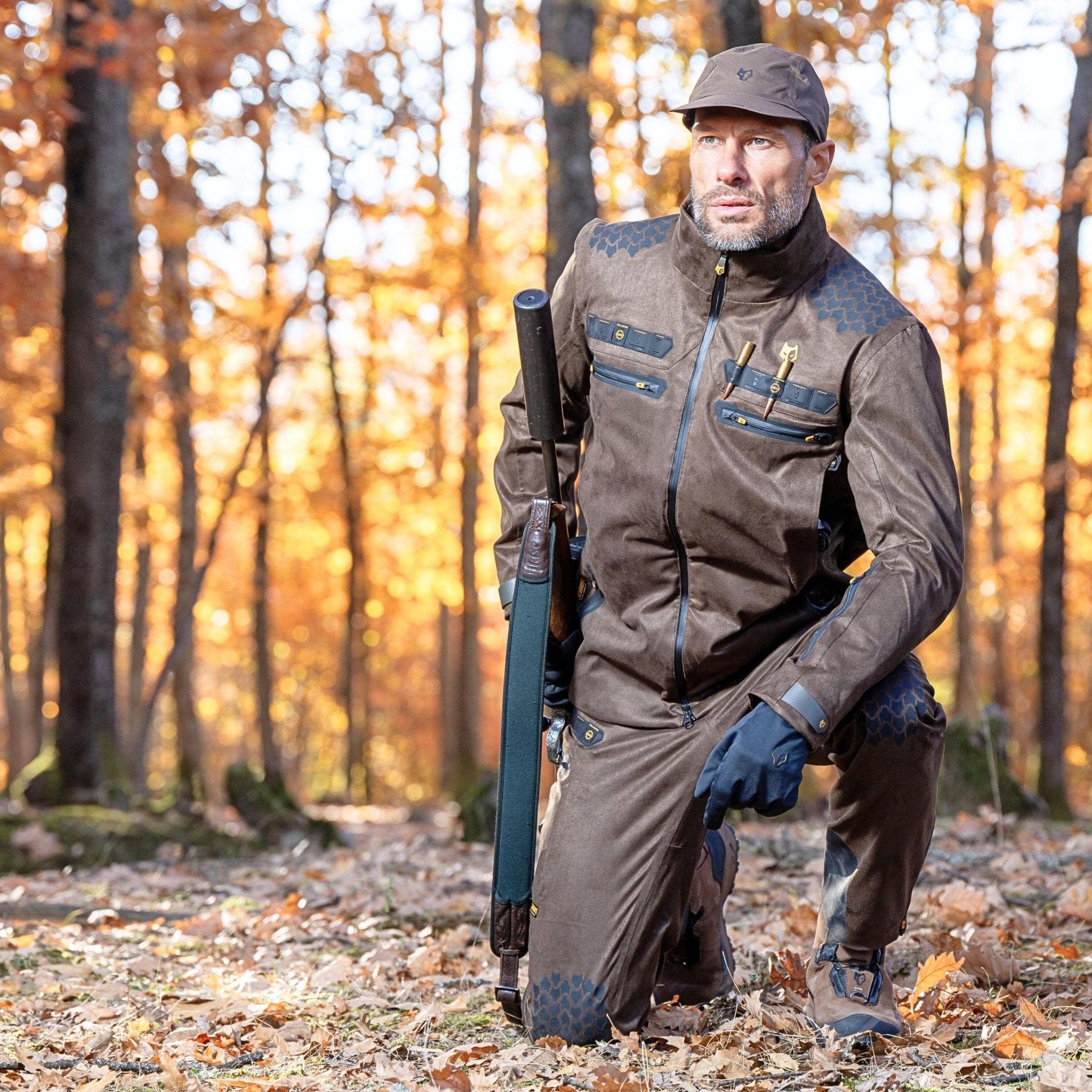
Watch the cold weather hunting jacket tested in extreme conditions. The video shows how insulation, weather protection and field-ready construction help hunters stay warm and focused.
Winter Hunting Pants for Lower-Body Protection
Winter hunting pants protect the legs and seat when walking through snow, kneeling on damp ground or standing still above frozen soil. Insulation is especially important during static hunts because the leg muscles produce little heat once movement stops.
Waterproof fabric and sealed seams prevent melting snow or saturated vegetation from reaching the inner layers. Articulated knees, stretch and a secure high waist help maintain mobility while climbing, sitting and stepping over obstacles.
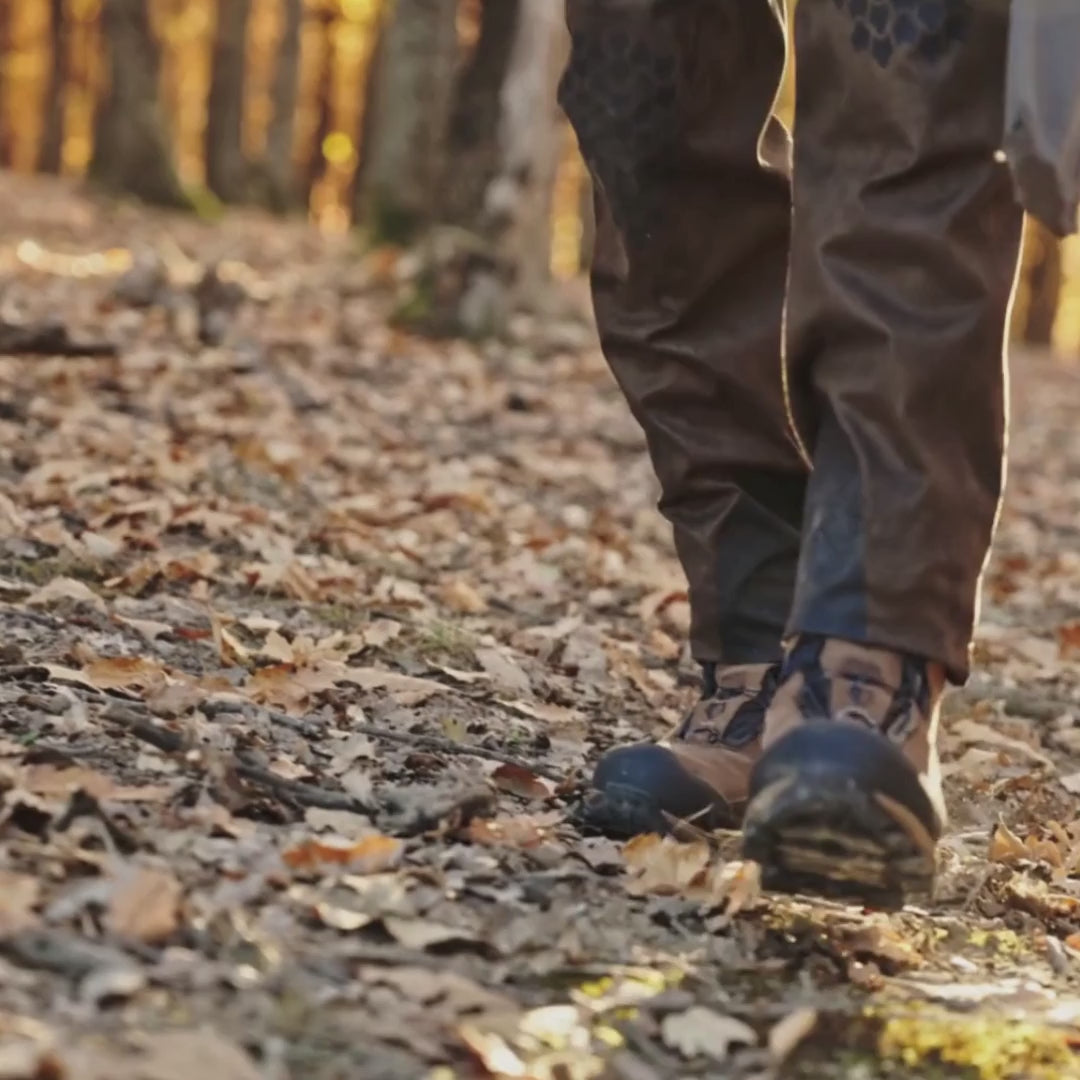
Watch the Fusion hunting pants in the field and see how they combine warmth, comfort and practical protection for demanding winter hunting conditions.
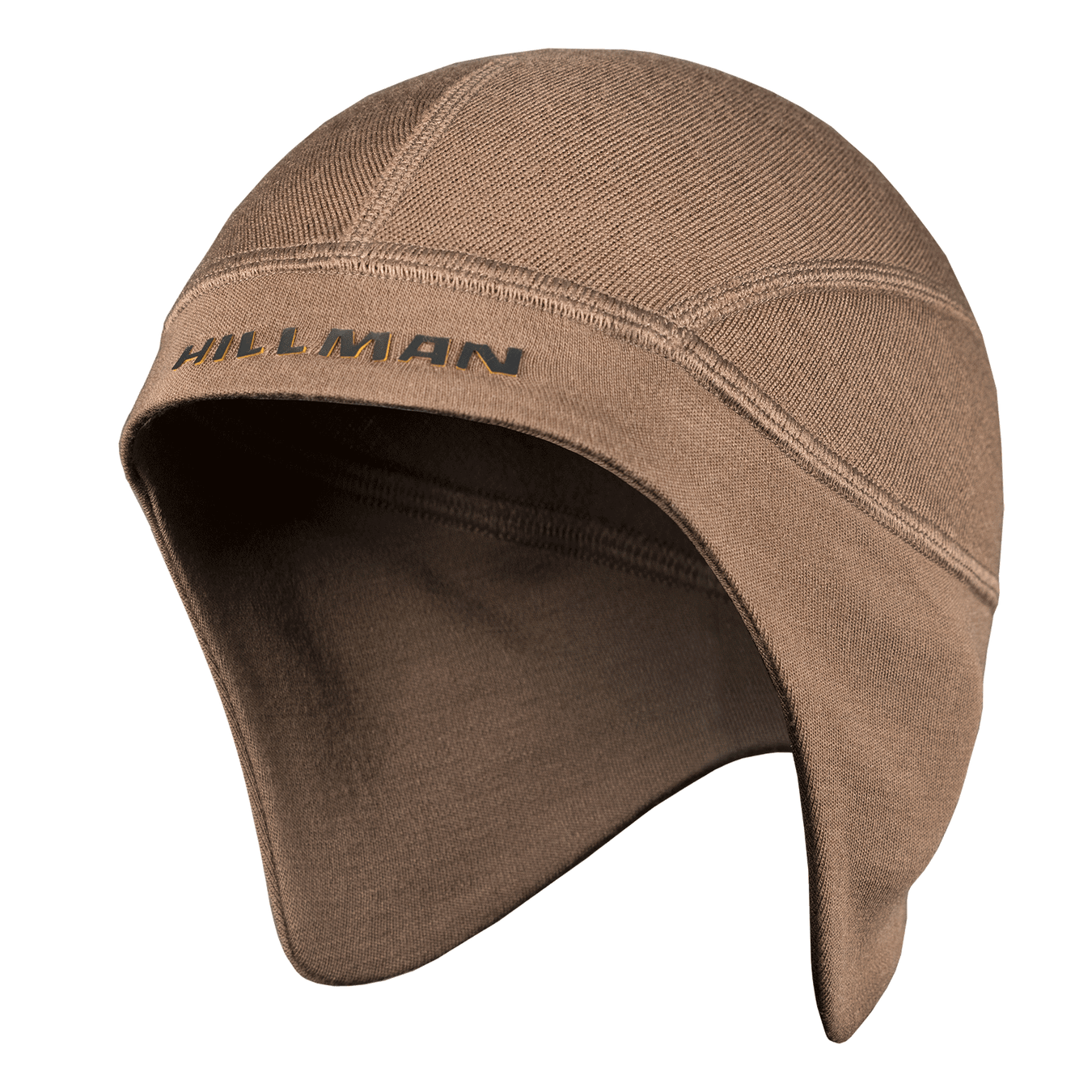
Merino Beanie for Heat Retention
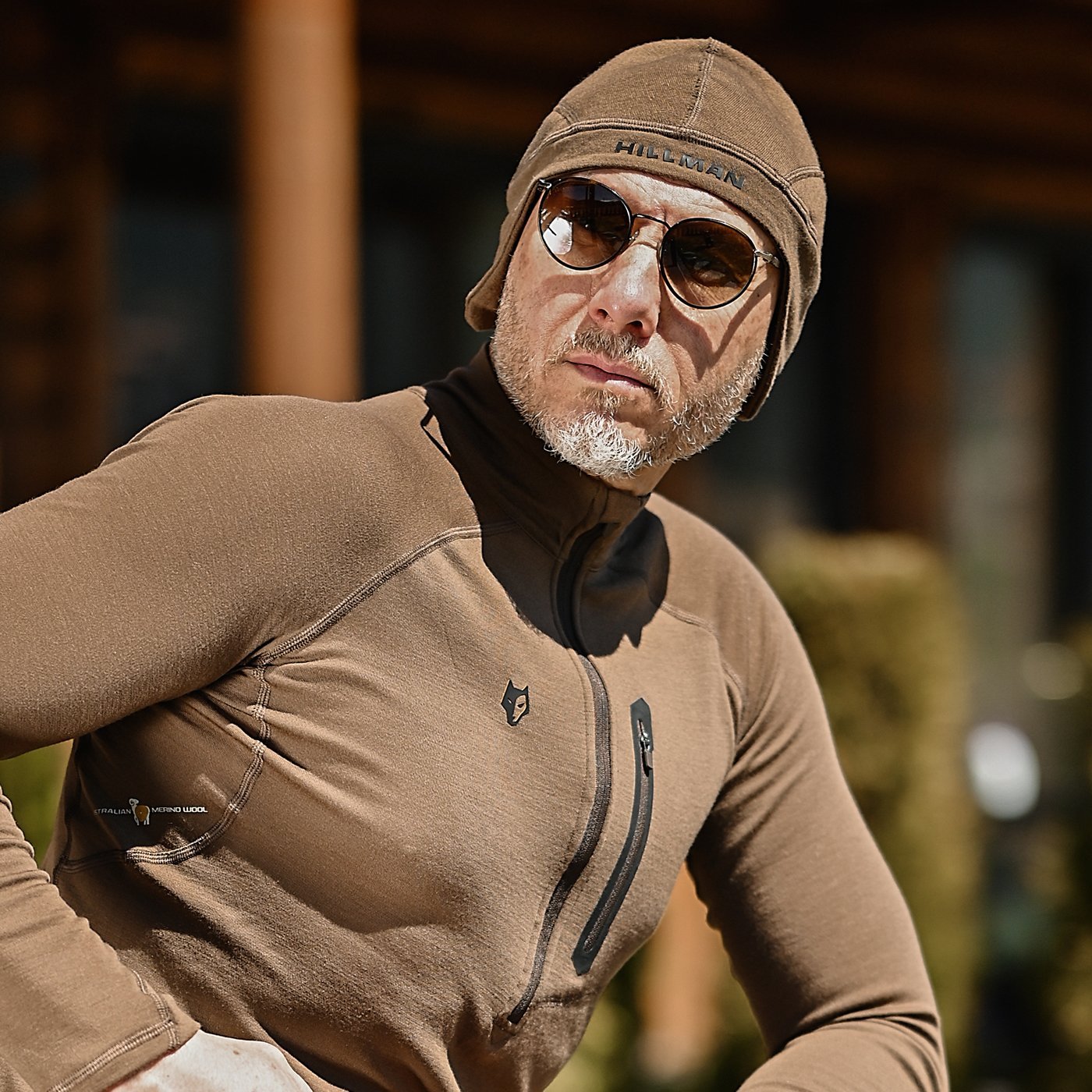
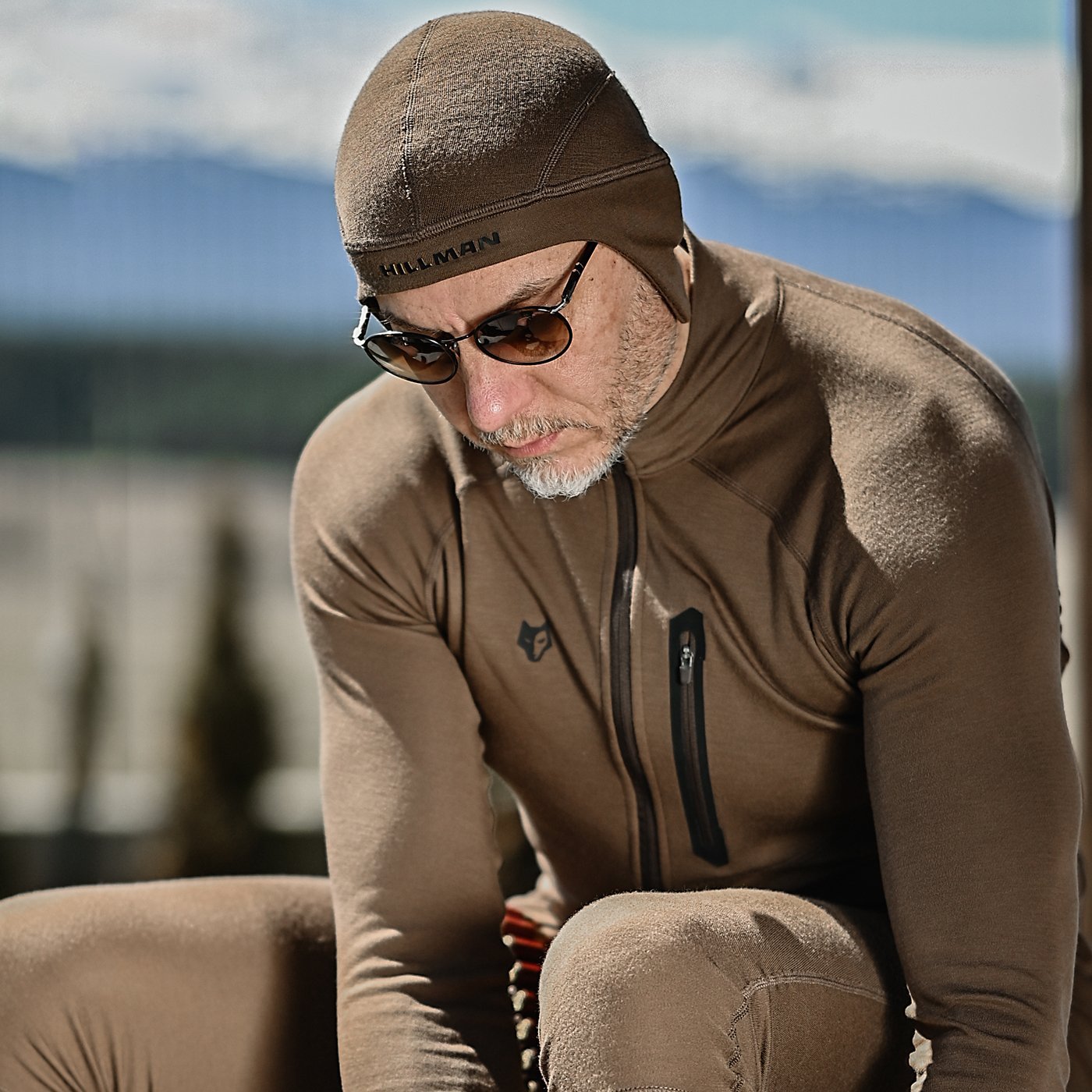
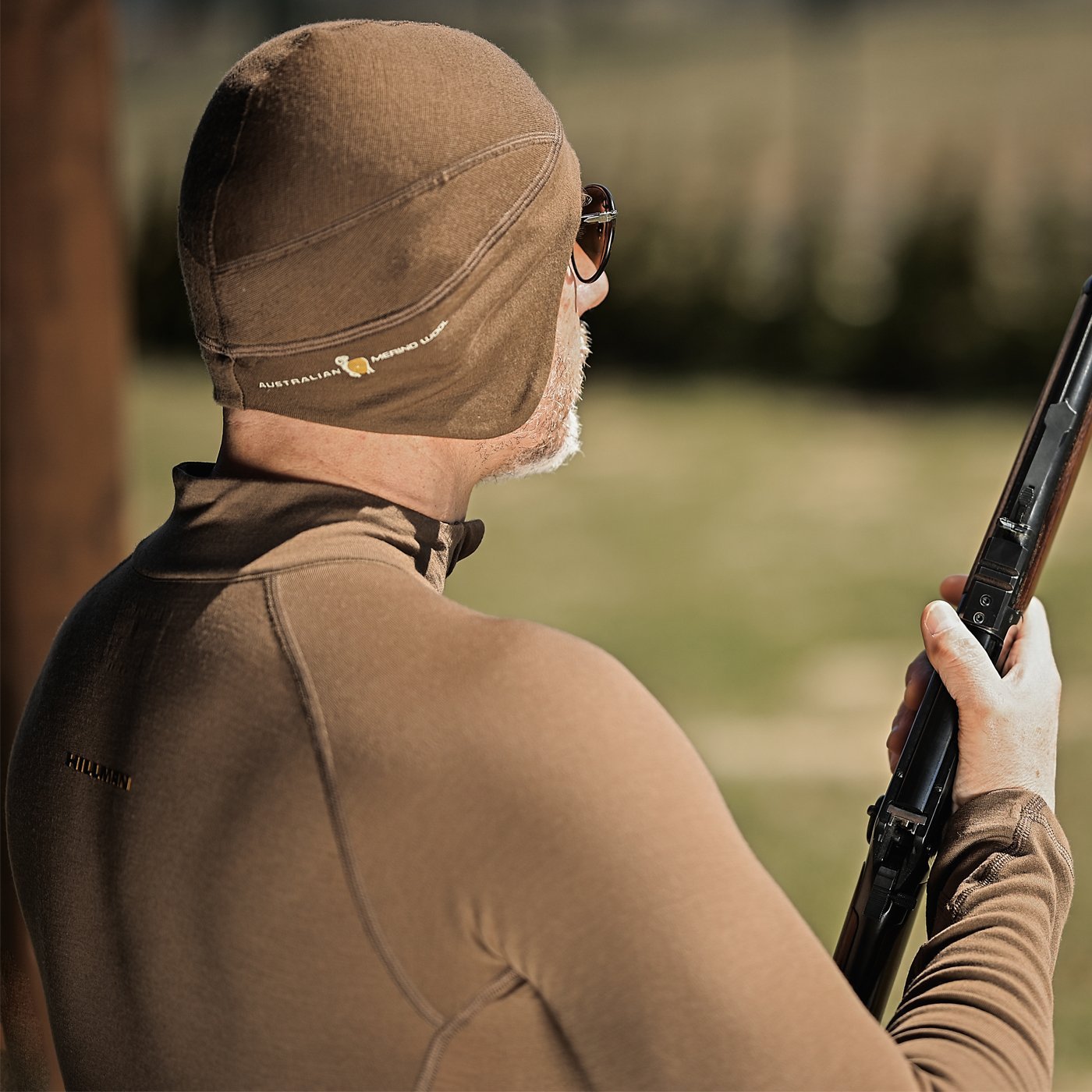
A merino beanie reduces heat loss around the head and ears during cold starts, driven hunts and exposed high-seat waits. Hillman’s Anatomic Merino Beanie uses 16.5μm merino wool ear flaps, a 350 g/m² merino fleece fabric and flatlock seams.
Its close anatomic shape fits beneath a hood without creating a bulky pressure point. Merino also supports temperature and moisture regulation when the hood is raised during wind or snow.
Watch how the Merino Termo Hunting Beanie adds warmth and comfort during cold hunting days. It shows why a soft merino beanie is useful for long waits, early mornings and layering under a hood.
Best Winter Hunting Gear for Different Cold Conditions
The right hunting gear for winter depends on how much the hunter moves and how long exposure lasts. For shoppers comparing warm hunting gear for men, the most useful distinction is between static insulation, active breathability and protection from wet weather.
No single setup suits every winter day. Layers should be adjusted before hard movement and restored before the body cools.
For Long Static Waits and Driven Hunts
Static winter hunts require maximum heat retention because the body produces little warmth while sitting or standing. An insulated waterproof jacket and trousers, merino base layers, a warm mid-layer, beanie, suitable socks and insulated boots create the necessary full-body system.
Close cuffs, cover the neck and add insulation before the wait begins. Waiting until shivering starts makes it much harder to restore comfortable body temperature.
For Active Stalking in Cold Weather
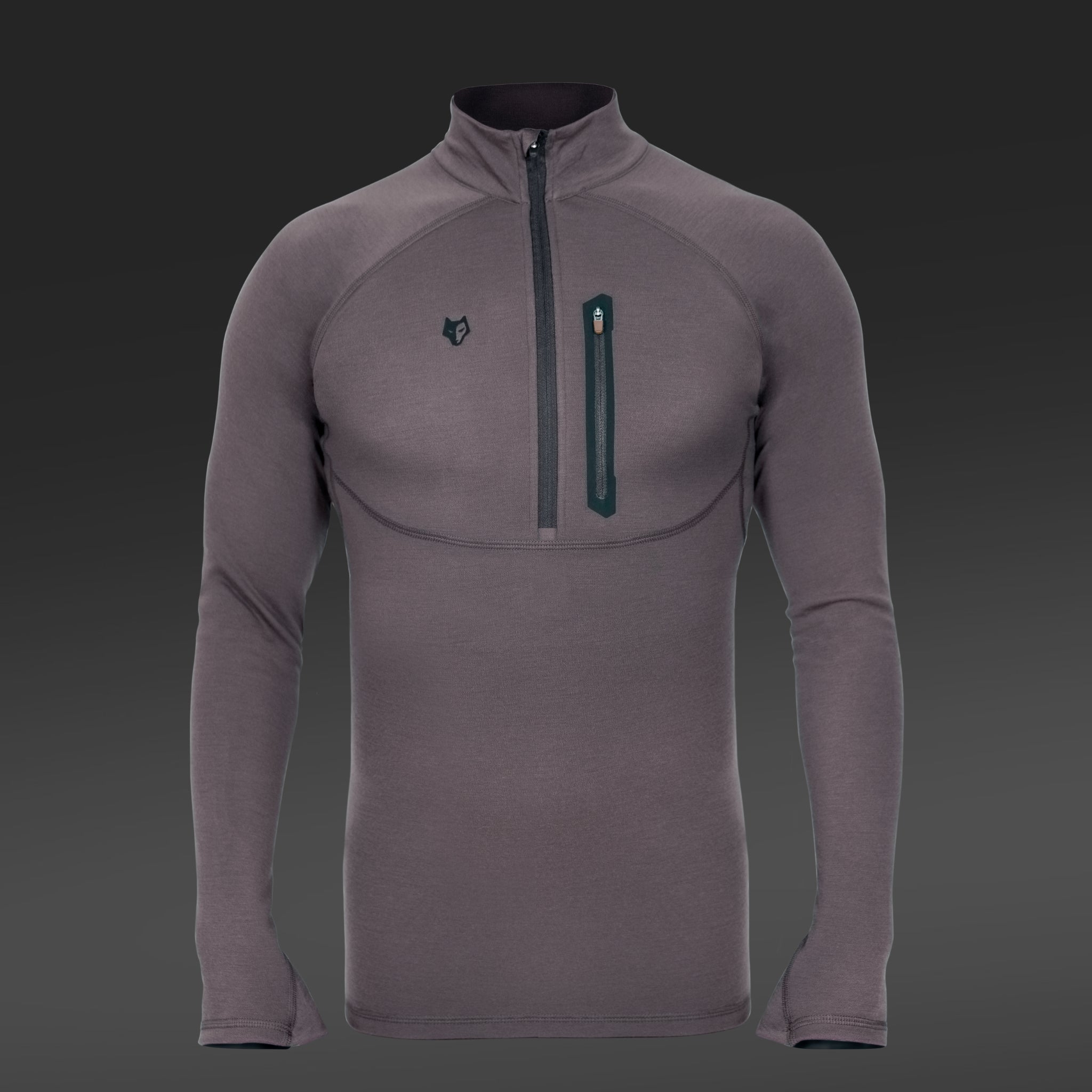
Active stalking requires breathable insulation and usable ventilation. Start with moisture-managing base layers, add controlled mid-layer warmth and choose an outer jacket with vents that can release heat during climbs.
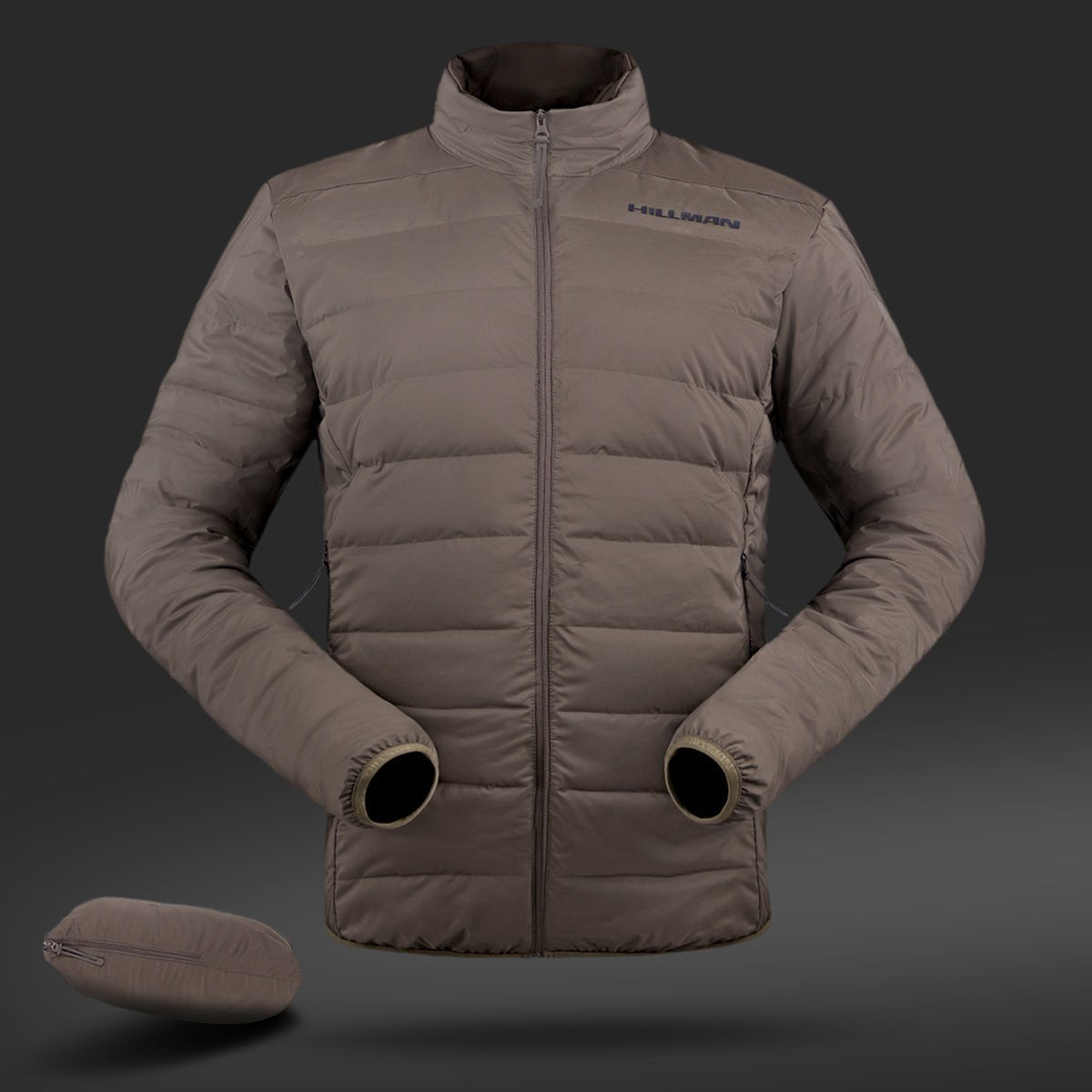
Avoid beginning the stalk in every available layer. Carrying a packable insulator for glassing and static pauses often keeps the hunter drier than wearing maximum insulation throughout the approach.
For Wet Snow, Wind and Changing Weather
Wet snow requires waterproof outer clothing, sealed seams and insulation that remains protected from saturation. Windproof adjustments around the hood, cuffs and hem reduce convective heat loss on exposed ground.
Quiet fabric still matters in frozen woodland, but protection cannot come at the cost of movement. The best hunting gear to stay warm combines weatherproofing with stretch, articulated shaping and ventilation rather than relying on thickness alone.
6OL Winter Hunting Gear for Extreme Cold

The 6OL jacket and trousers are Hillman’s sub-zero system for severe cold, wet snow and prolonged exposure. Both use waterproof AlphaShell construction, Dryhunt® nanomembrane technology, Matrix® insulation and fully taped seams.
This system suits long winter waits and harsh conditions where standard insulation may not provide sufficient protection. Ventilation allows the hunter to release heat during active periods before closing the system for static use.
6OL Winter Hunting Jacket
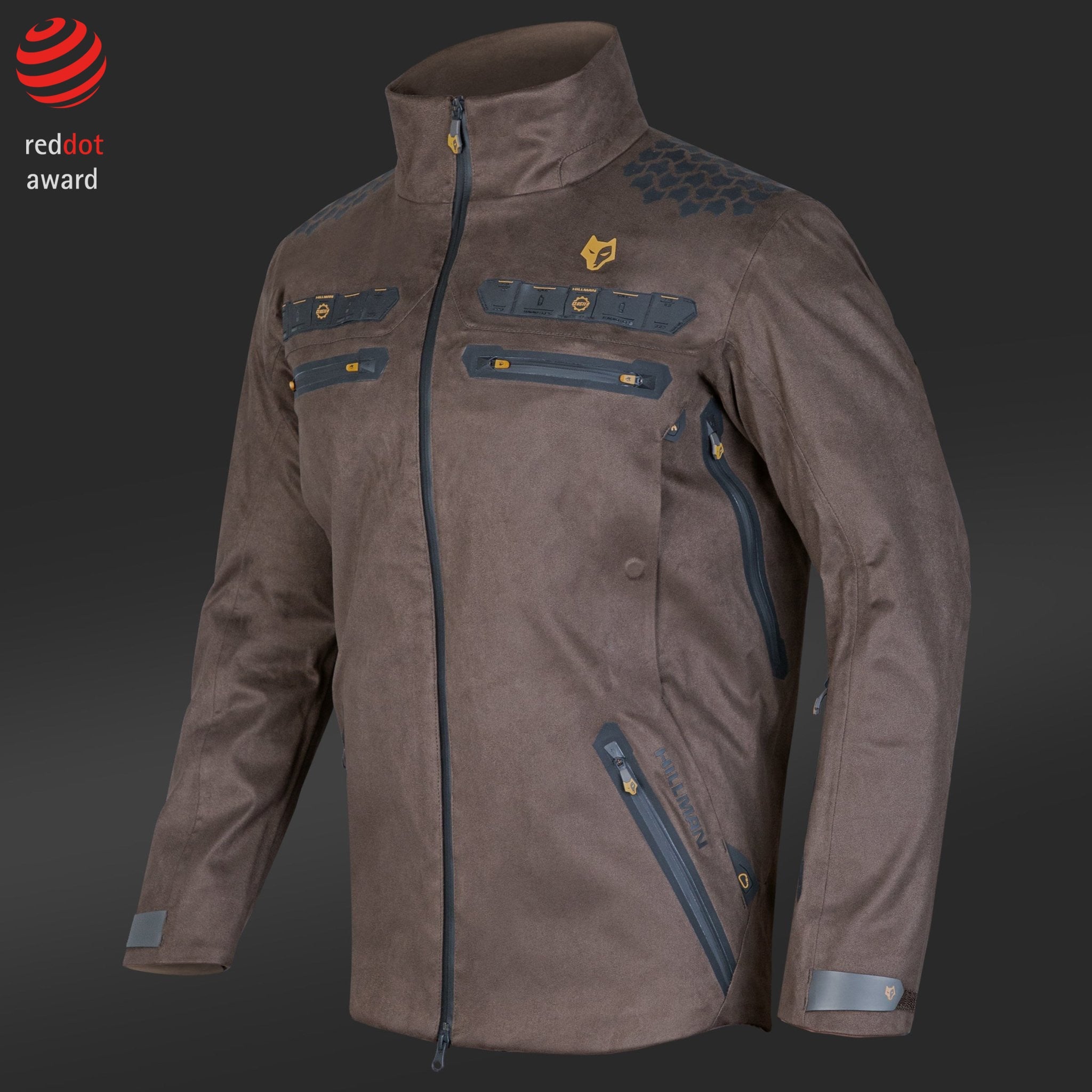
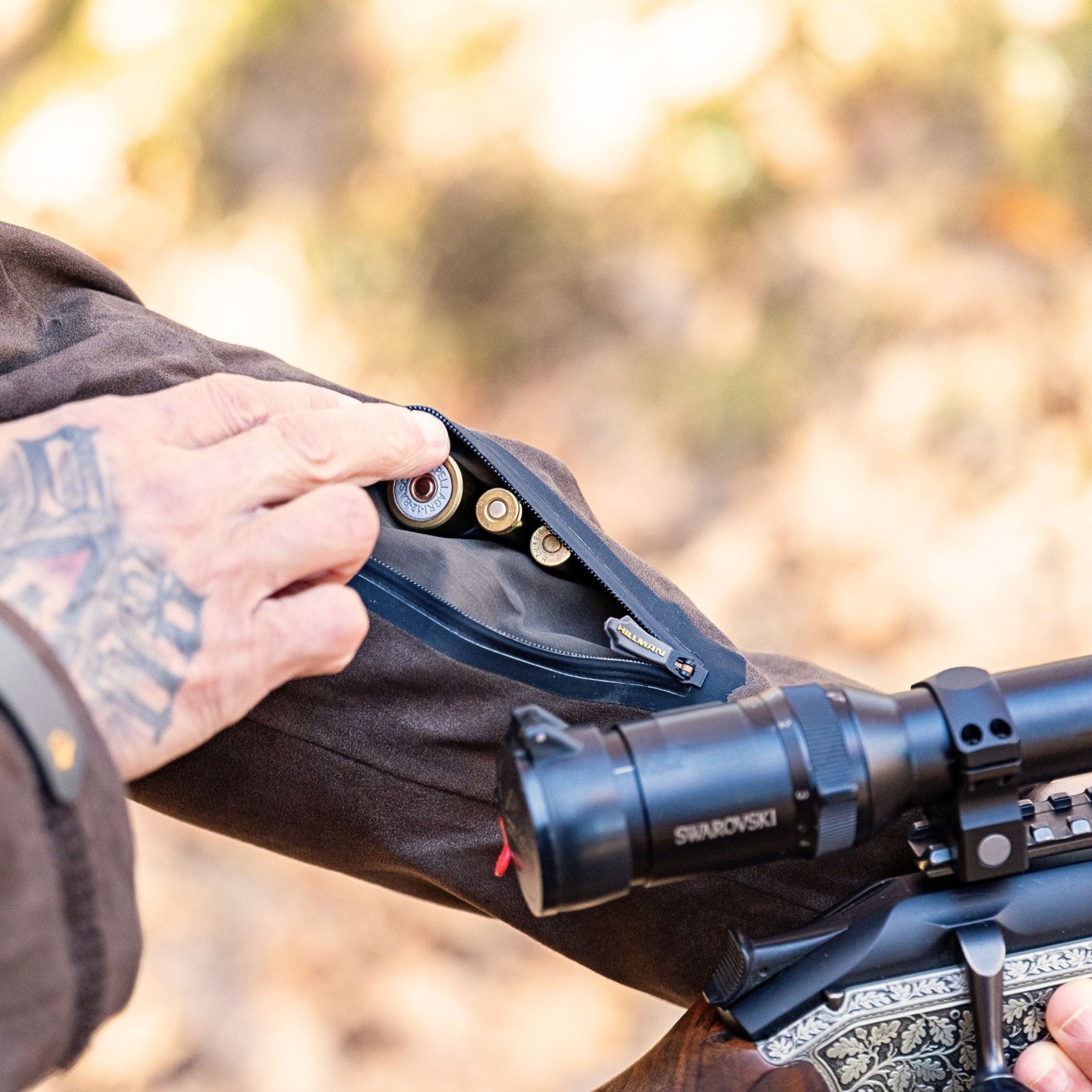
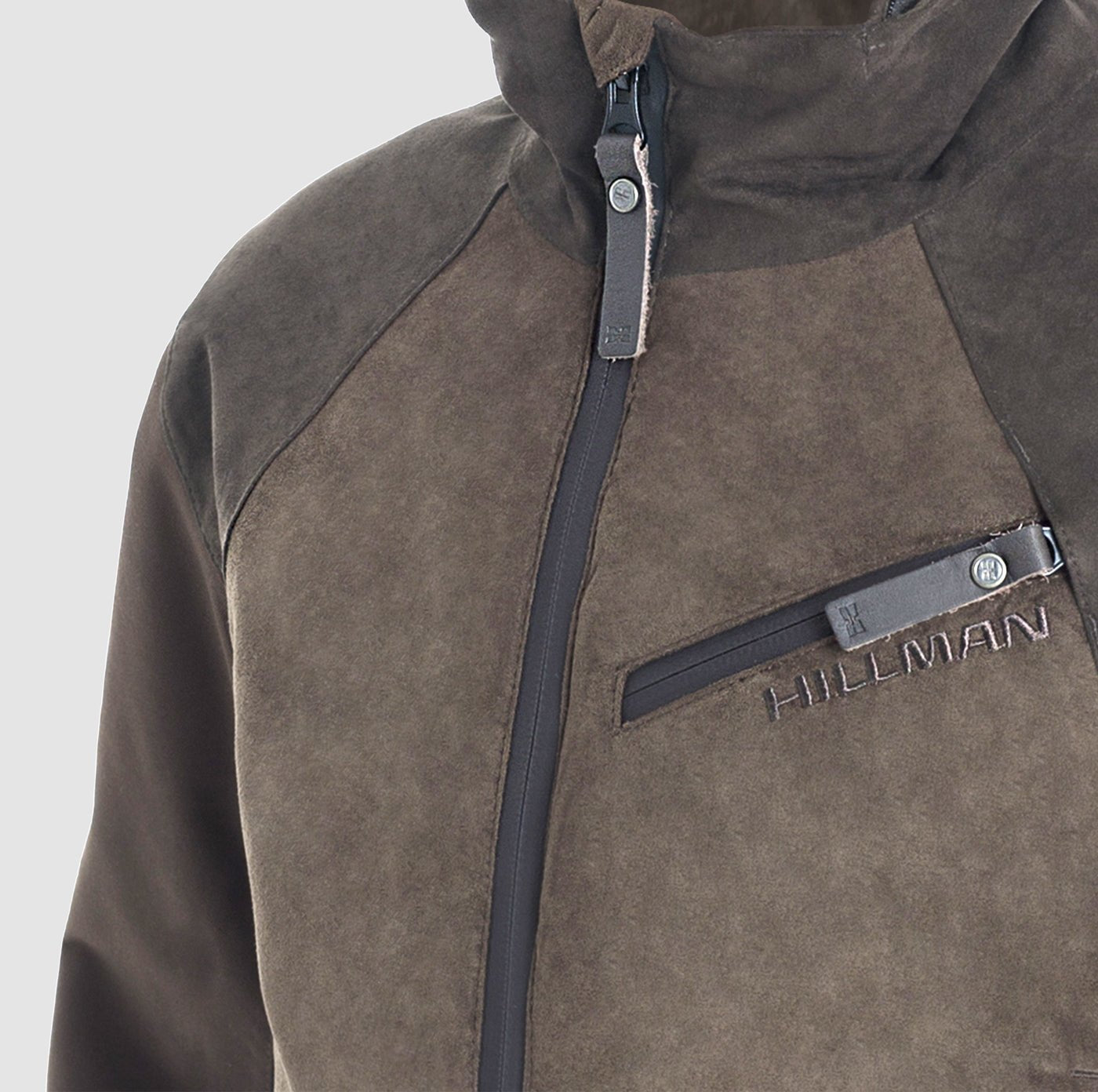
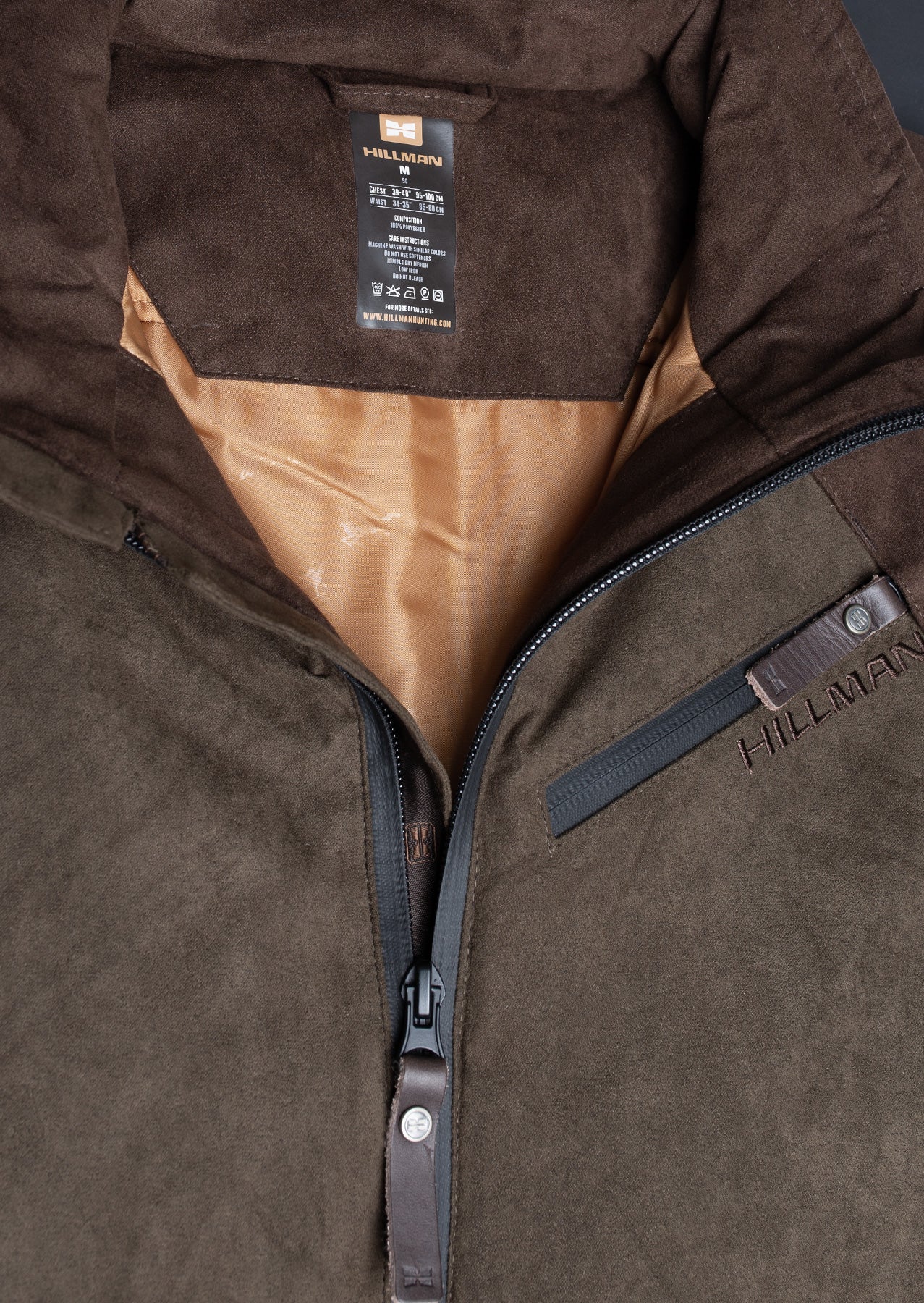
The 6OL Winter Hunting Jacket combines a waterproof shell with Matrix® insulation, a graphene heat-distribution lining and zonal merino fleece at the back. The Dryhunt® membrane, underarm Thermovent zips and Aerospacer3D panels help manage moisture during movement.
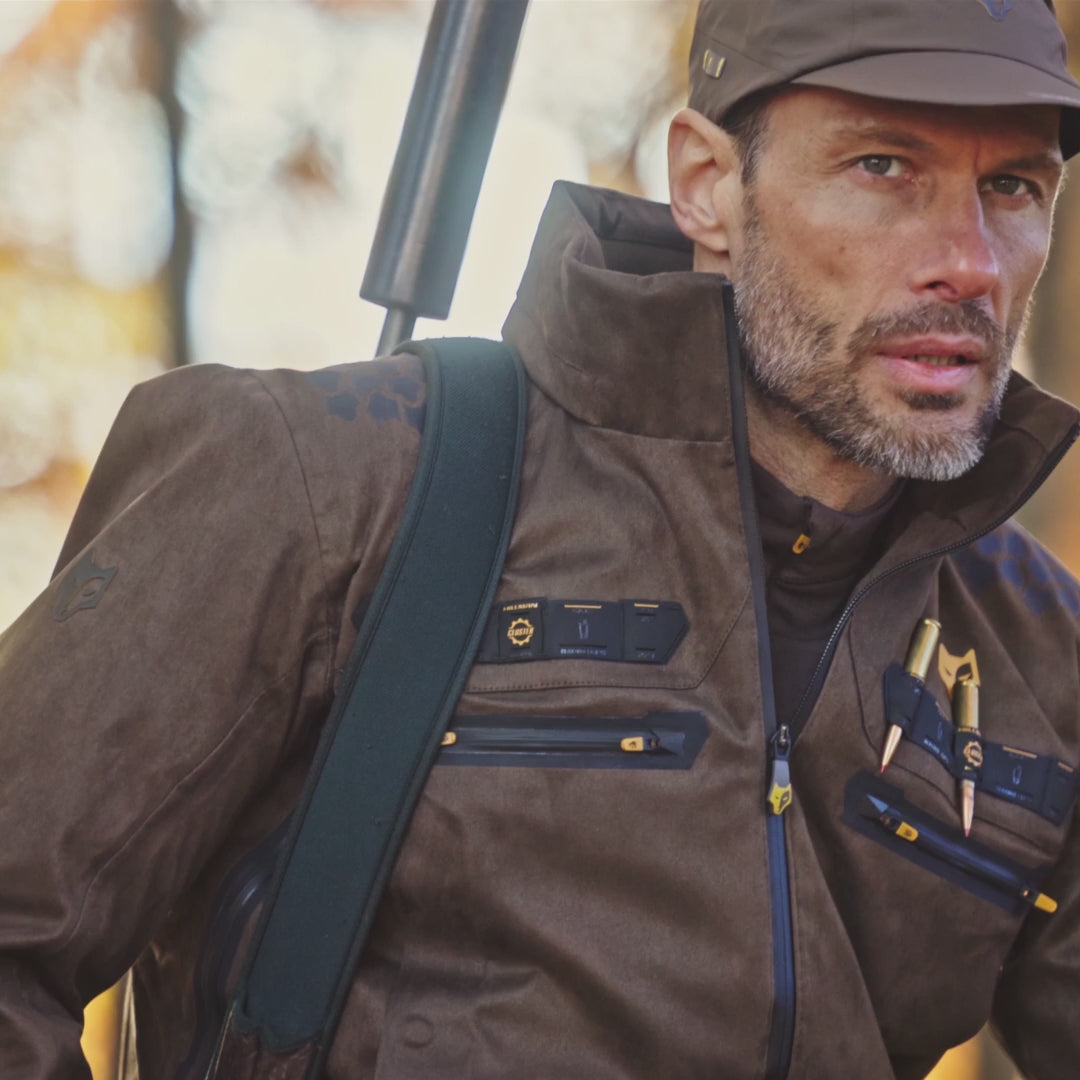
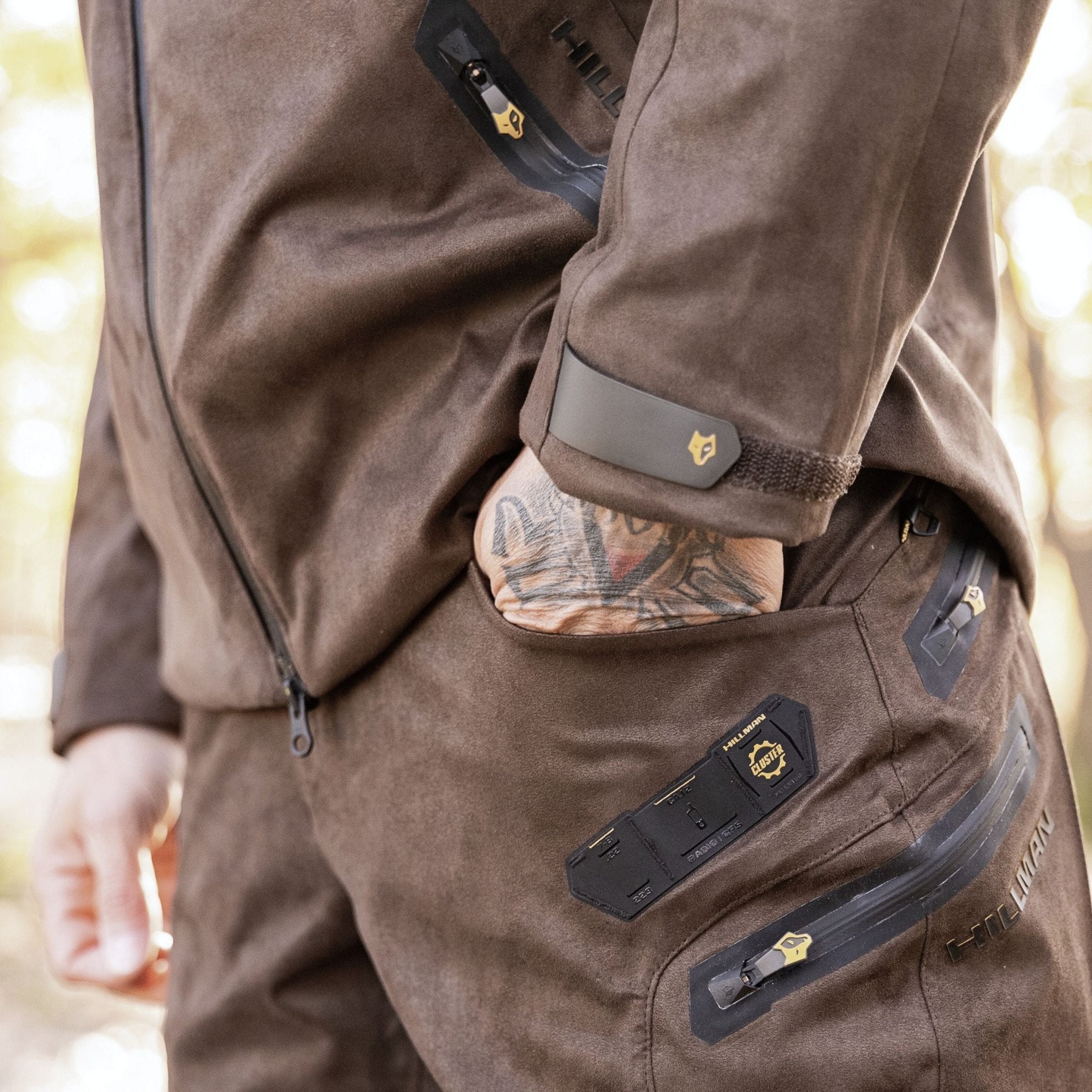
Its OptiSight6® adjustable hood, waterproof YKK® AquaGuard™ zips, Cluster® equipment system and multiple pockets support long field days. Durasuede fabric reduces movement noise, while articulated elbows, stretch and gusseted underarms maintain the shooting motion.
6OL Winter Hunting Pants
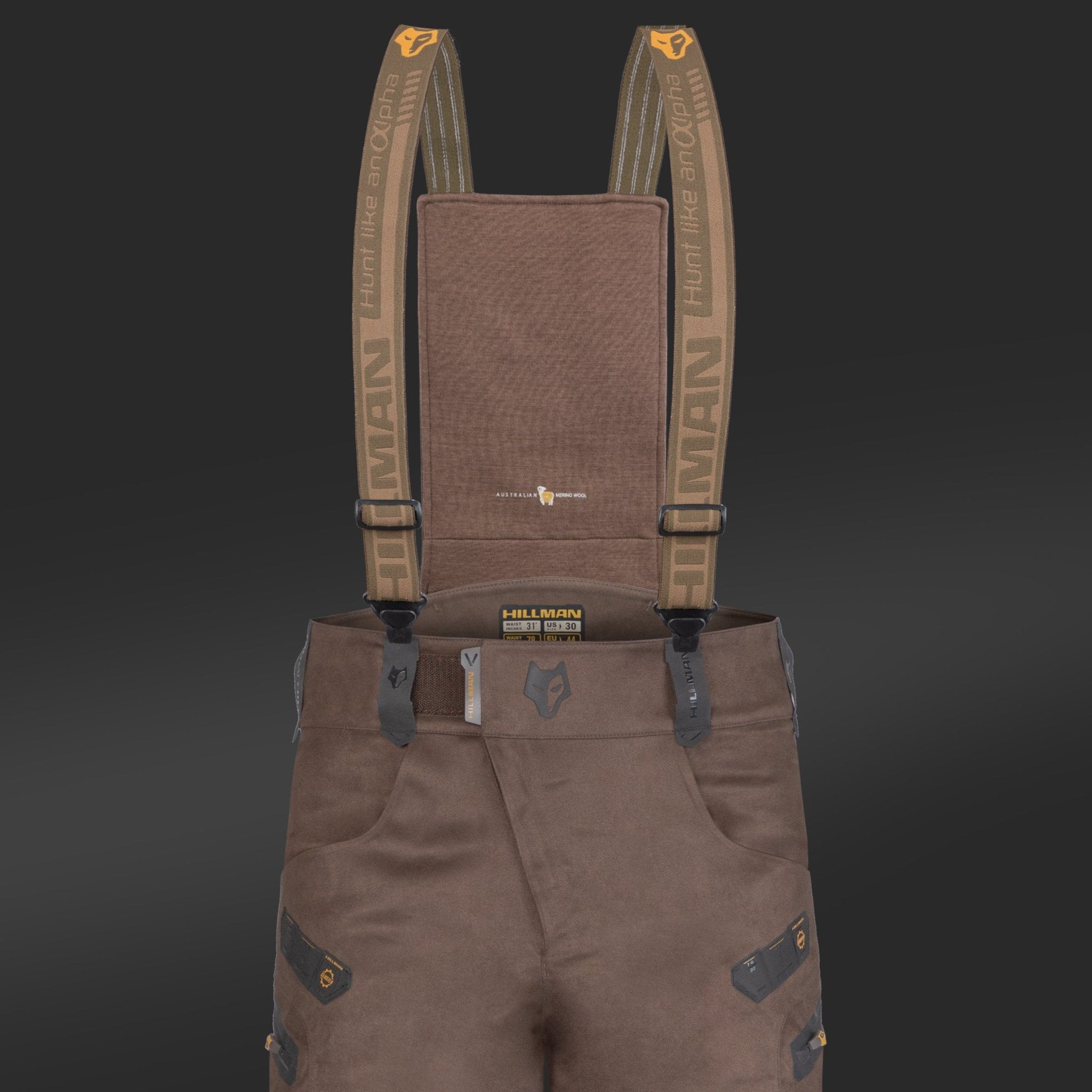
The 6OL Winter Hunting Pants protect the lower body with a fully seam-taped waterproof shell and the same Matrix®, graphene and Dryhunt® technologies. Ventilation zips and a waist vent help control heat during walking.
A high waist, detachable braces, articulated knees and adjustable boot cuffs improve coverage in snow. Reinforced knees, removable EVA knee protection and waterproof cargo pockets are useful when kneeling or working close to frozen ground.
Fusion Hunting Gear for Flexible Winter Use
 Fusion jackets and trousers provide waterproof insulated protection with less emphasis on severe sub-zero exposure. Their Duraheat® hollow-fibre insulation, Atmotec® waterproof breathable membrane and taped seams suit mobile winter hunting and mixed terrain.
The Fusion system is appropriate for cold days involving regular movement. Hunters expecting extreme temperatures or very long static waits should add suitable layers or choose 6OL.
Fusion Jacket for Movement and Field Comfort
The Fusion Jacket suits stalking, woodland movement and winter days that alternate between walking and waiting. Its breathable construction, underarm eyelet ventilation and two-way front zip allow easier temperature adjustment.
The jacket includes a detachable adjustable hood, DWR-treated Deerskin® suede fabric, Duraheat® insulation and sealed seams. Cargo, chest, inner and radio pockets keep essential equipment accessible without requiring a heavy external carrying system.
Fusion Pants for Cold Weather Mobility
Fusion Pants support walking, kneeling and climbing through winter terrain with an ergonomic modern fit and lightweight insulation. The waterproof Atmotec® membrane and taped seams protect against wet cover and melting snow.
A high fleece-lined waist, adjustable ankles and reinforced lower legs add practical protection. Hunters planning to wear thick long johns should allow enough room so the trousers do not restrict the knees or compress the thermal layer.
Camo Winter Gear vs Plain Warm Hunting Gear

Camo winter gear reduces the visibility of the hunter’s outline, while plain green or brown clothing offers greater versatility. The decision should reflect hunting distance, cover, local visibility rules and use beyond the shoot.
Hillman offers 3DX versions of the Fusion and 6OL systems alongside plain earth-coloured alternatives.
Choose Camo for Concealment
Choose camo for woodland stalking, high seats and boar hunting where broken shapes and colour transitions help the body merge with surrounding cover. It is most useful when game may observe the hunter at close range or from several directions.
A matching jacket and trousers create consistent concealment, although controlled movement, wind direction and the background remain more important than pattern alone.
Choose Plain Colours for Versatility
Choose plain green or brown for driven hunts, countryside work, travel and general outdoor use where full camouflage is unnecessary. Muted colours still reduce harsh visual contrast across woodland and mixed terrain.
Some driven hunts require Blaze Orange or other high-visibility elements. Always follow local law and the instructions of the shoot organiser rather than relying only on concealment.
Hillman Winter Hunting Gear Details

Hillman winter clothing focuses on insulation efficiency, quiet outer fabrics and anatomic movement. These details help the hunter stay protected without carrying the bulk associated with conventional padded winter garments.
Jackets and trousers must also work together, leaving no exposed or compressed areas when the hunter bends, sits or raises the rifle.
Insulation Without Unnecessary Bulk
Efficient insulation traps warmth without making the garment excessively thick. Matrix® in the 6OL system uses a thin closed-cell construction, while Fusion relies on lightweight Duraheat® hollow fibres.
Lower bulk leaves space for adjustable base and mid-layers. It also reduces stiffness around the shoulders, hips and knees during active winter hunting.
Quiet Fabric for Cold Weather Hunting
Quiet fabric matters because frost, dry snow and frozen leaves create an unusually still acoustic environment. Clothing noise can become more noticeable during close-range roe stalking or careful woodland movement.
Hillman uses suede-like outer surfaces on 6OL and Fusion products to reduce rustling. No fabric eliminates contact noise completely, so branches, hard equipment and frozen vegetation still require careful handling.
Freedom of Movement in Jackets and Pants
Winter clothing should allow aiming, climbing, sitting and kneeling without pulling across the body. Articulated joints, stretch fabrics and gusseted construction preserve movement even when insulating layers are worn underneath.
Fit remains critical. Clothing that is too tight compresses insulation, while excessive volume catches on cover and allows cold air to circulate inside the system.
FAQs
Does the 6OL jacket genuinely outperform a standard insulated jacket?
6OL system or ARGO suit: which one do you actually need?
Does fabric noise from winter gear actually matter in frozen conditions?
How does layering work across a day that involves both climbing and long, cold waits?
Is the unified anatomic tailoring for men, women, and youth actually effective?
Can winter hunting jackets handle the wet snow typical of British winters?
What's the biggest mistake hunters make storing cold-weather gear between seasons?
Shop Related Collections